by Yiming Li
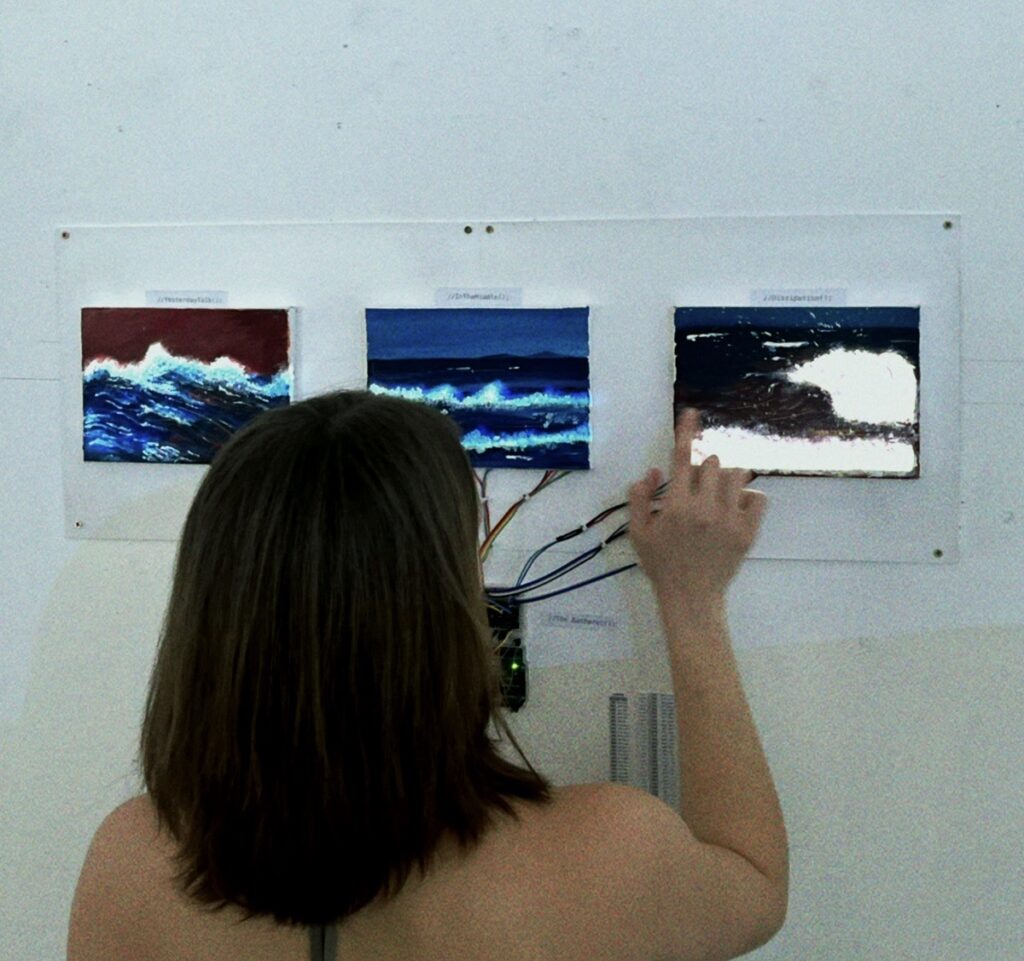
那是一片沸腾的海。As in previous years, the aim of this project is to refine and reflect upon the work I have completed in my studio this year. I selected a project I had created in Expressive Data and spent some time thinking about how to present it in an exhibition setting. As for the ‘refinement’ aspect, given the very limited time available, I will not be making any further creations to the project itself, but will instead focus on how best to present and showcase the concepts and creative process that informed my work on this project.
Although I had started planning and thinking about how to present this exhibition several weeks in advance, I actually had less than a week to get everything set up. Fortunately, I felt that my original project was already very well developed; all I needed to do was make a few functional simplifications for the practicalities of the exhibition, as well as add some decorative elements to provide visual guidance.
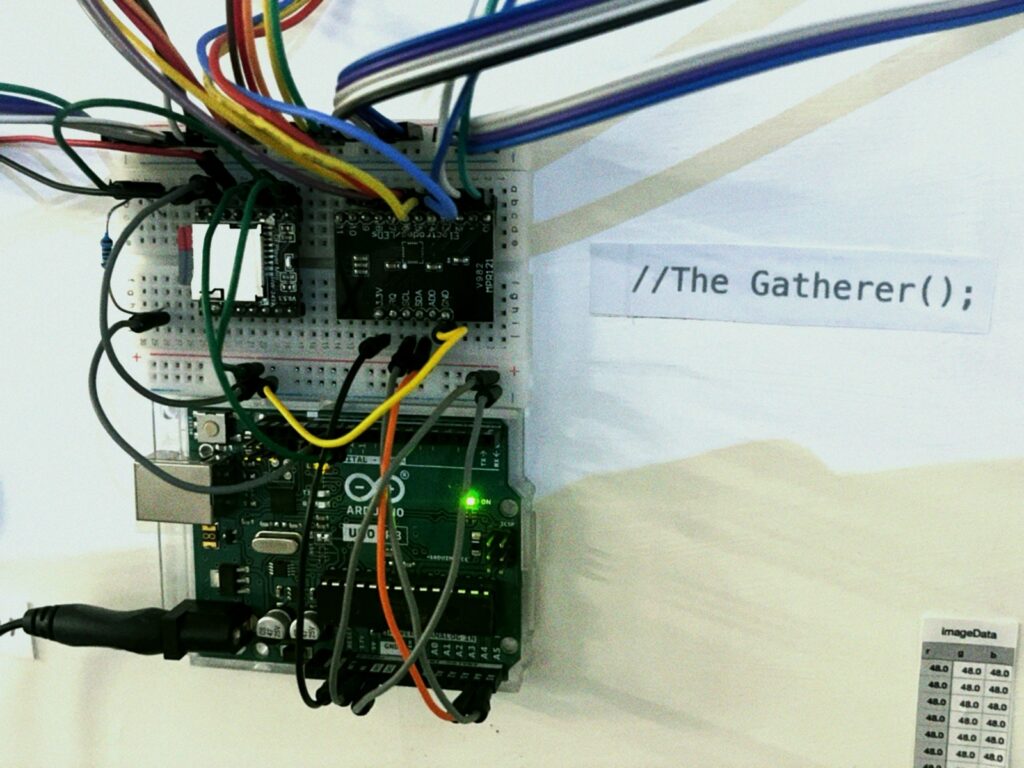
My plan is to do away with all unnecessary electronic equipment and wiring in the actual exhibition, particularly items such as laptops and speakers. However, in my original project, the Arduino served solely as a trigger, and the MIDI data from Processing was mapped directly to a live performance in Ableton Live; consequently, I have had to simplify this aspect. My initial idea was to use physical sound sources instead of Ableton, or to replace the laptop with something like a Minima. However, these ideas would undoubtedly have led the project in a more complex direction. After several brief discussions with my supervisor, I had a realisation. The process of mapping MIDI signals to sound sources does not necessarily have to be in real time; I could dispense with the audio software itself, and even with Processing, and use an Arduino to handle the vast majority of the work.
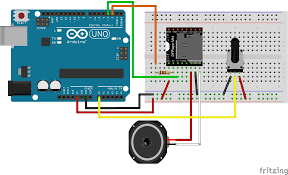
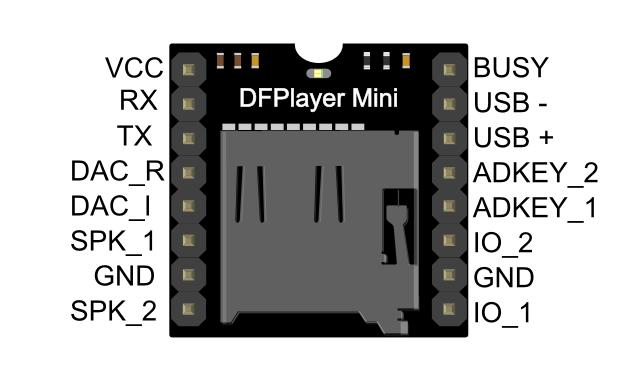
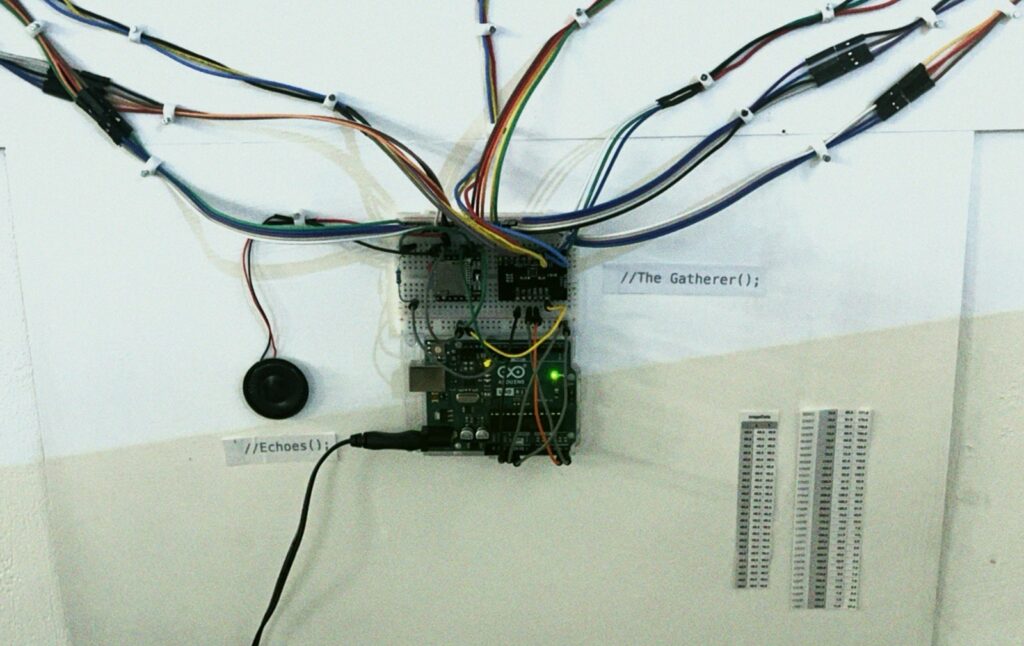
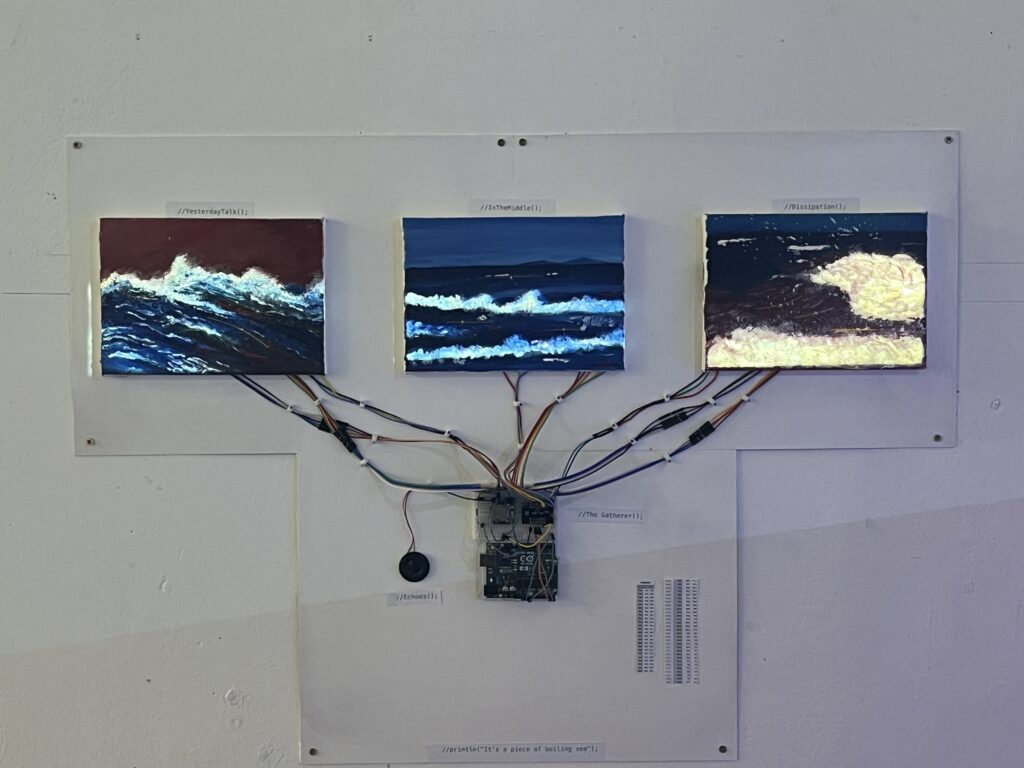
In short, Arduino has a component that integrates the ability to read audio from an SD card and play it through speakers. My audio is pre-recorded, which means I can export the soundtrack from Ableton in advance and play it back in three segments. Next, I’ll be linking the signals from the MPR121 touch sensor with DFplayer so that each image plays its corresponding audio track.
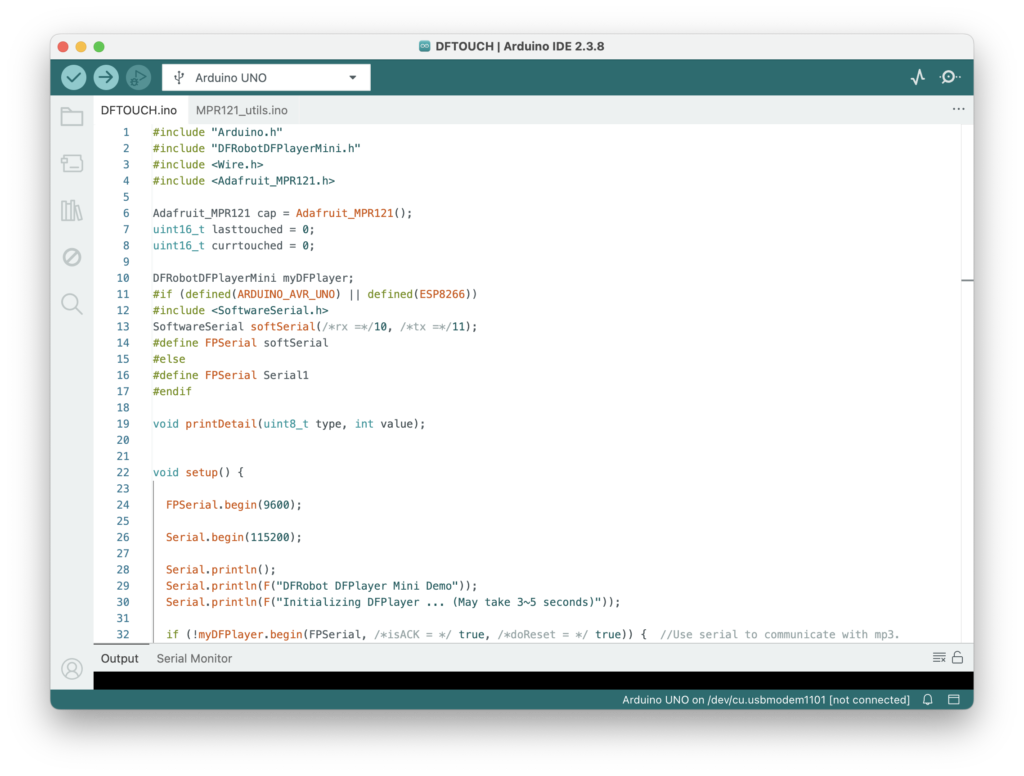
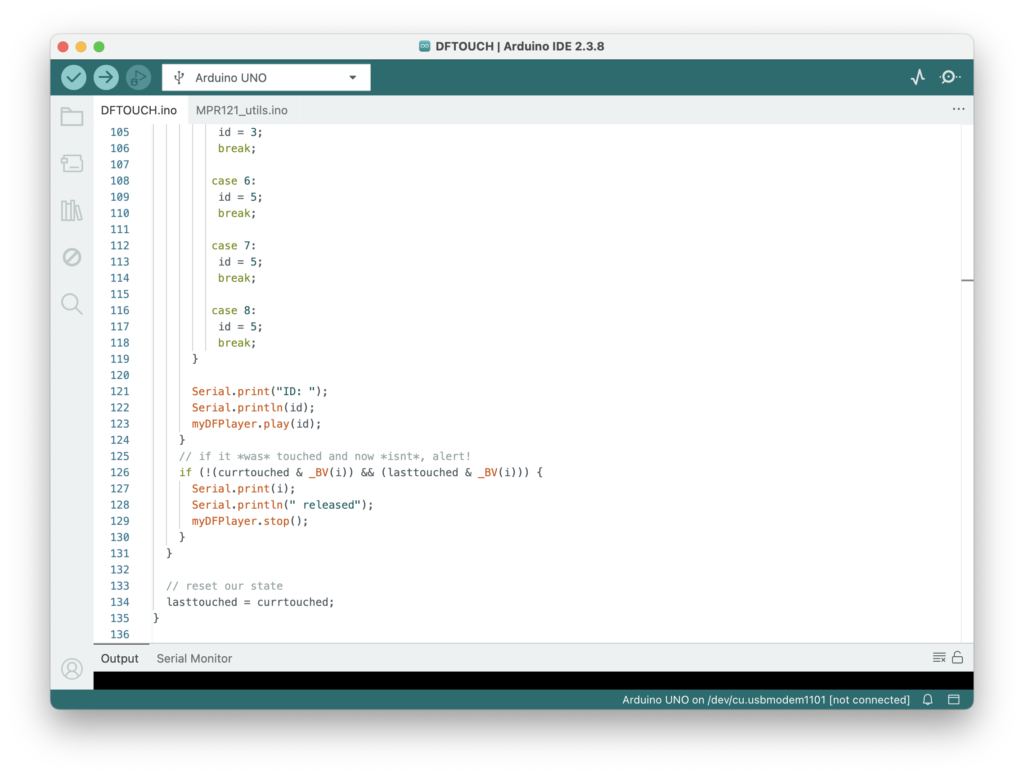
I spent some time working on the code. My tutor helped me sort out some of the integration and debugging issues. Due to some Mac system issues and other external factors, the final code ended up looking a bit verbose, but fortunately it achieves the results I had envisaged.
Following the last review of this project, I mentioned in my reflection that I wanted to remove the entire frame; I didn’t like the feeling of being constrained. So this time, I’ve re-planned the project, thinking about how to make it clean and concise whilst still incorporating everything I want to showcase. Compared to last time, for the Open Share exhibition, I hope to include more of the thoughts I had whilst creating this project—those emotional elements—rather than focusing on the technical aspects.
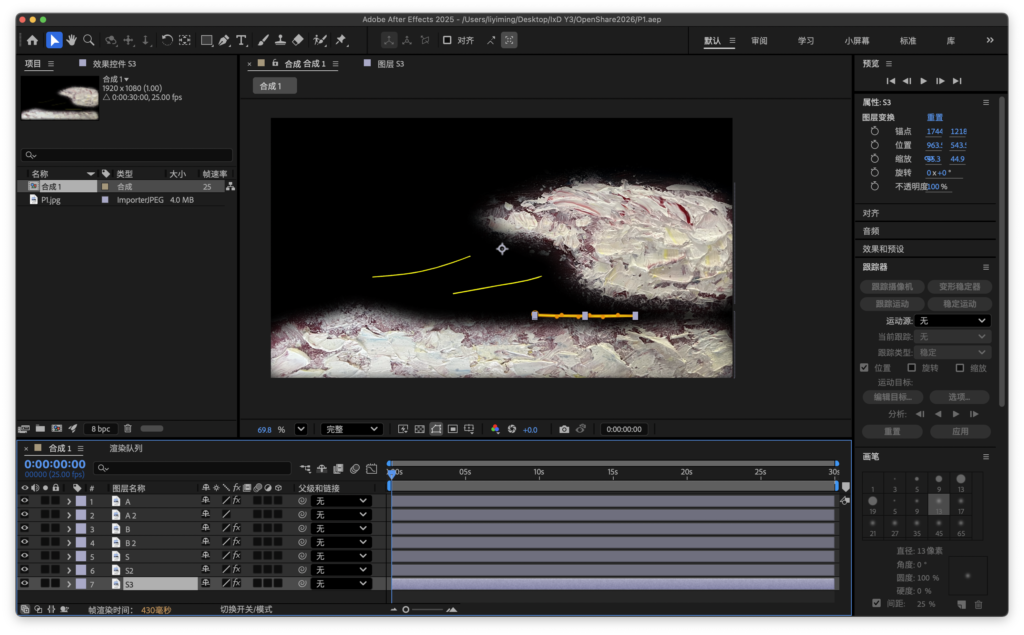
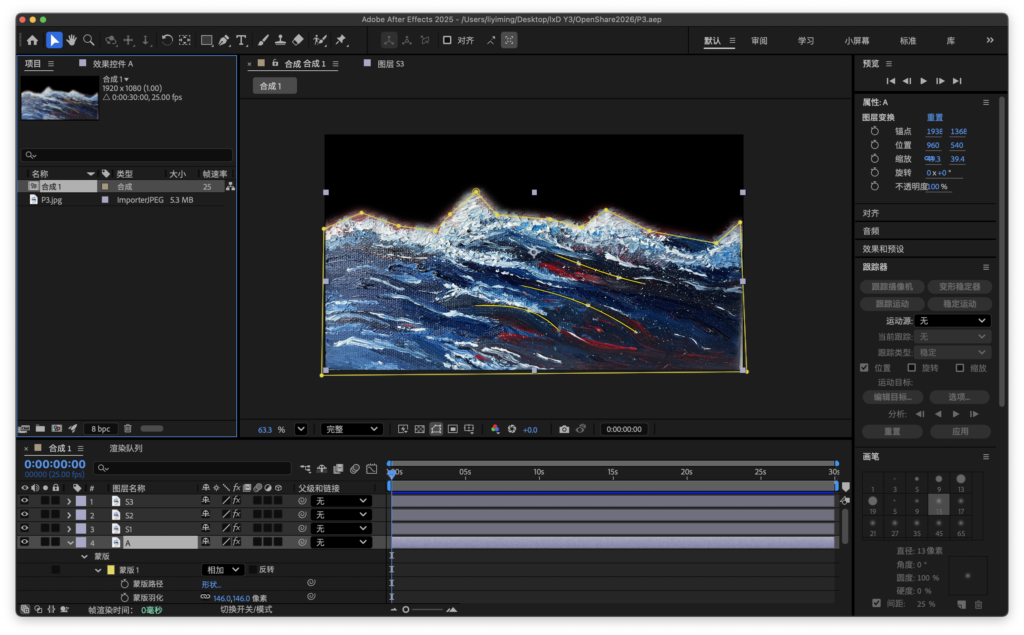
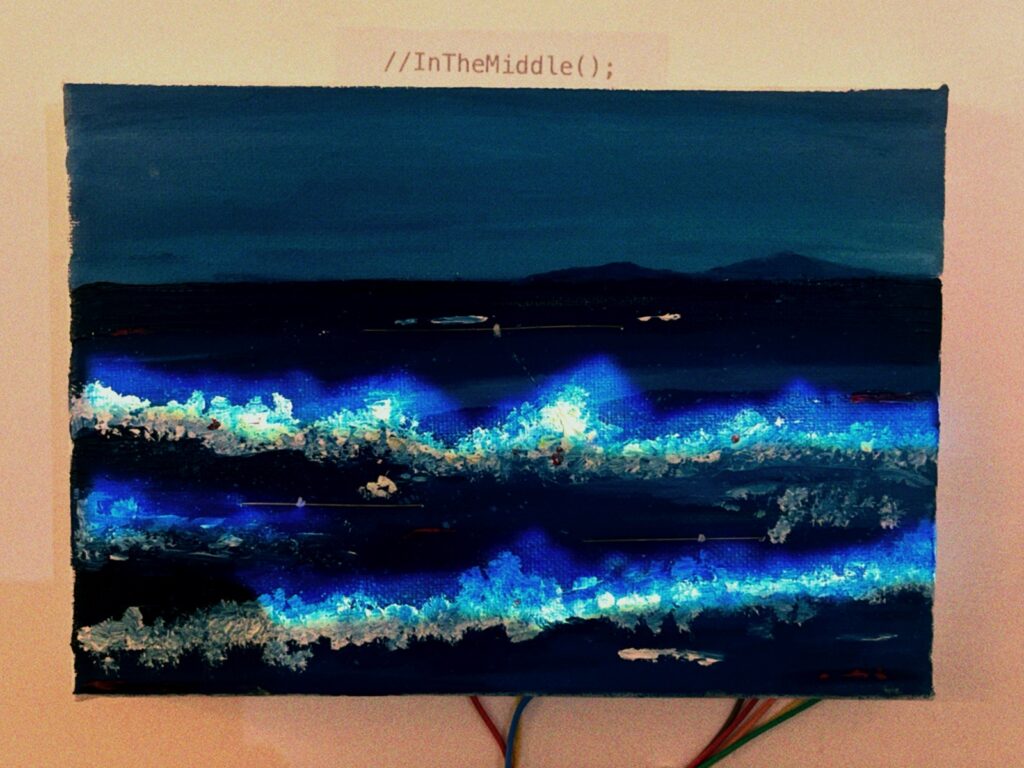
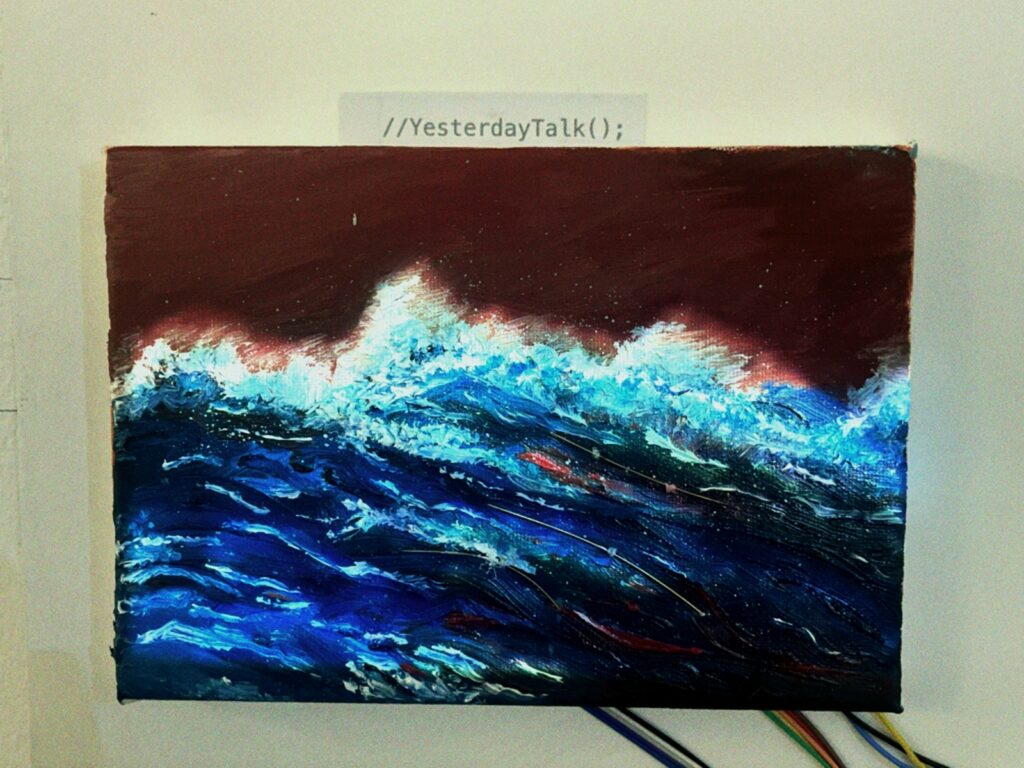
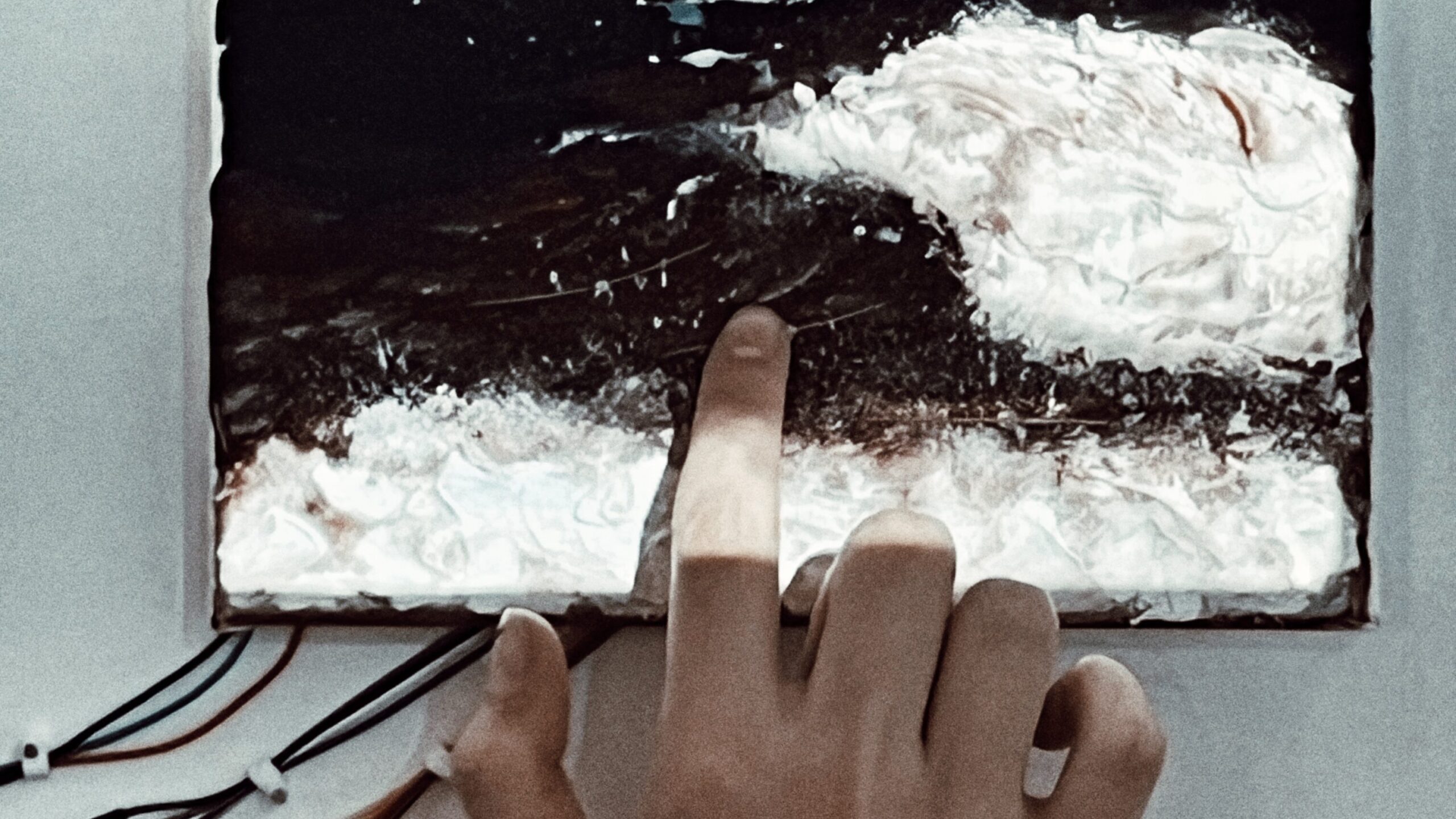
A few weeks ago, I spent some time thinking about how I could give the project a bit of a visual boost for the exhibition. I decided that the simplest and most practical way to achieve this would be to use projection mapping. I imported all three paintings into After Effects and created different motion effects for each. I cut out some of the key sections as masks and used the Puppet Anchor Tool to animate the colours in those areas. These motion effects weren’t created at random, but follow the brushstrokes I used when I originally painted them. As a result, when viewed up close, you can sense the paint flowing; step back a few paces, and the ocean in the painting appears to be churning with waves.
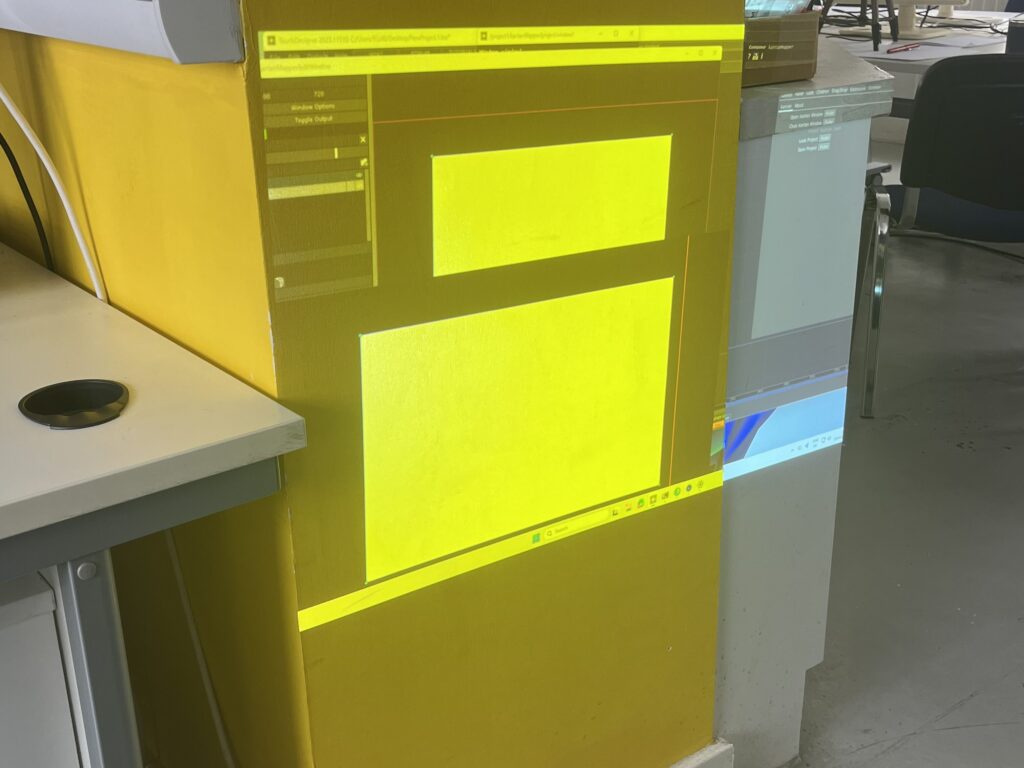
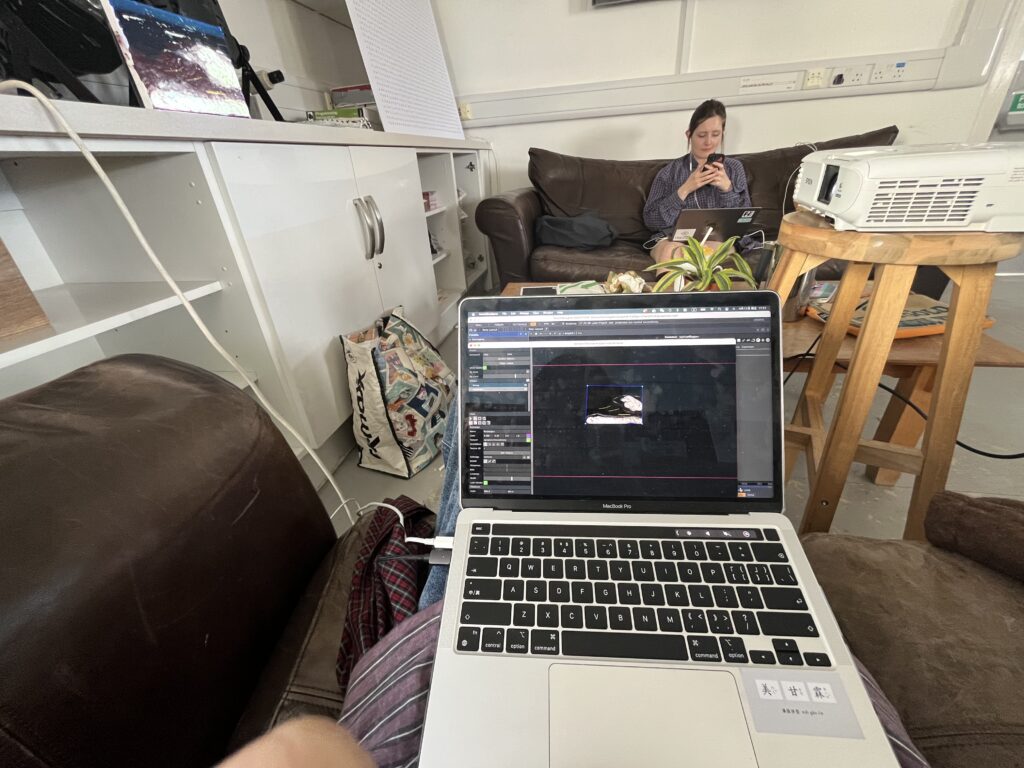
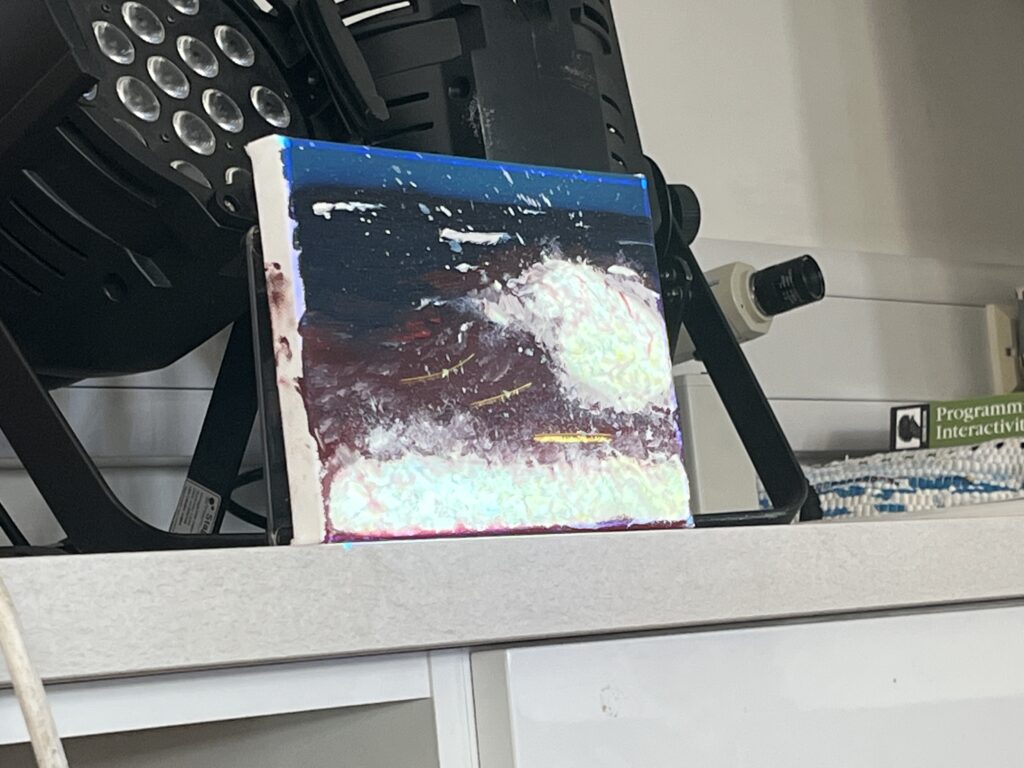
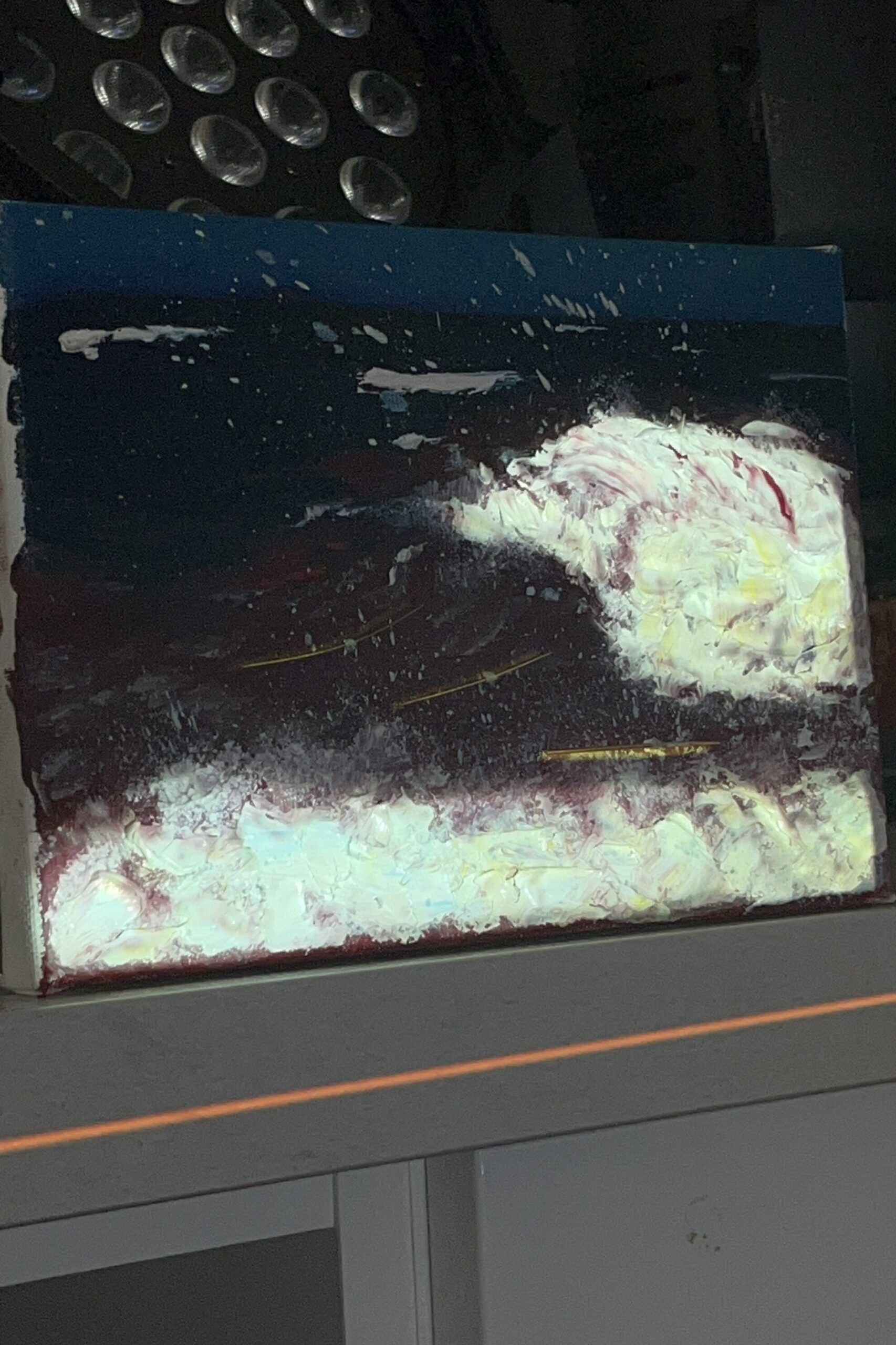
I exported these images, imported them into Kantan Mapper within Touch Designer, and then projected them onto the canvas. To achieve the best possible result, I tested them under various lighting conditions, constantly adjusting the feathering, opacity and scale of the masks. I exported numerous versions of these videos for testing, and eventually achieved a result that I found relatively satisfactory.
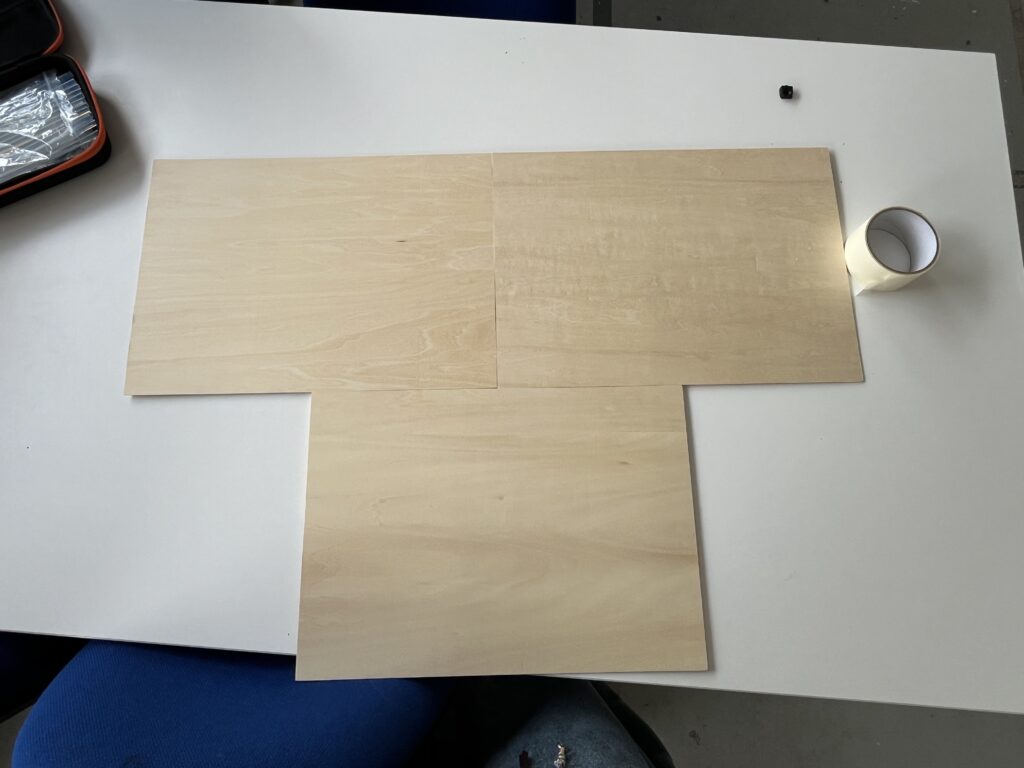
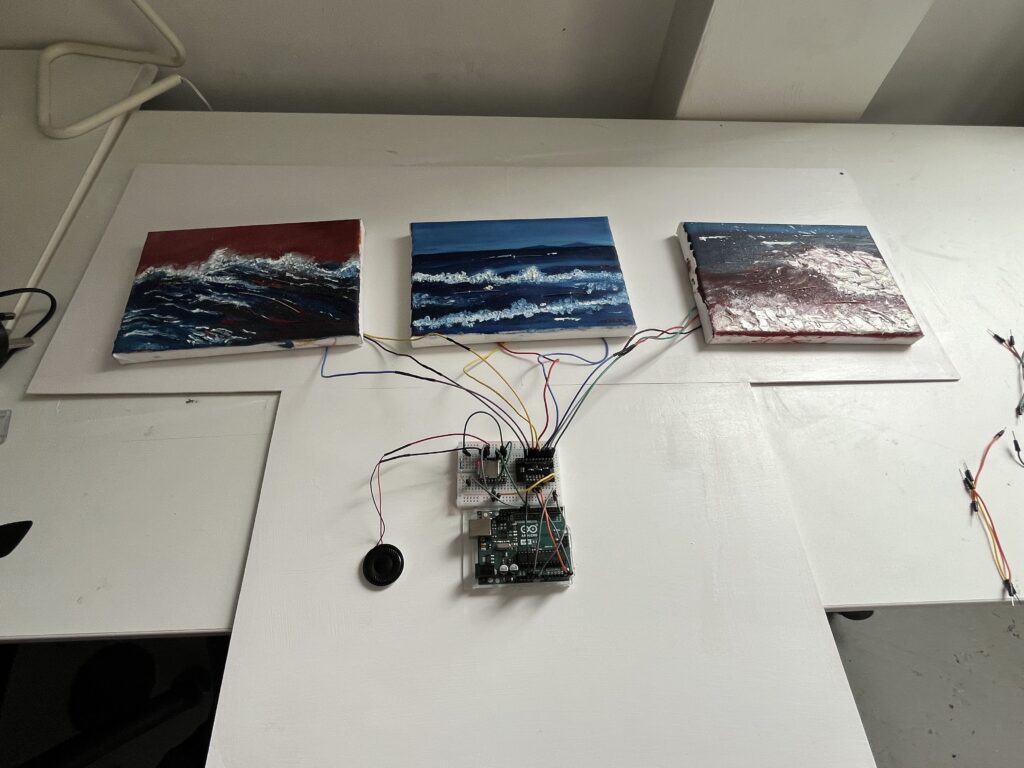
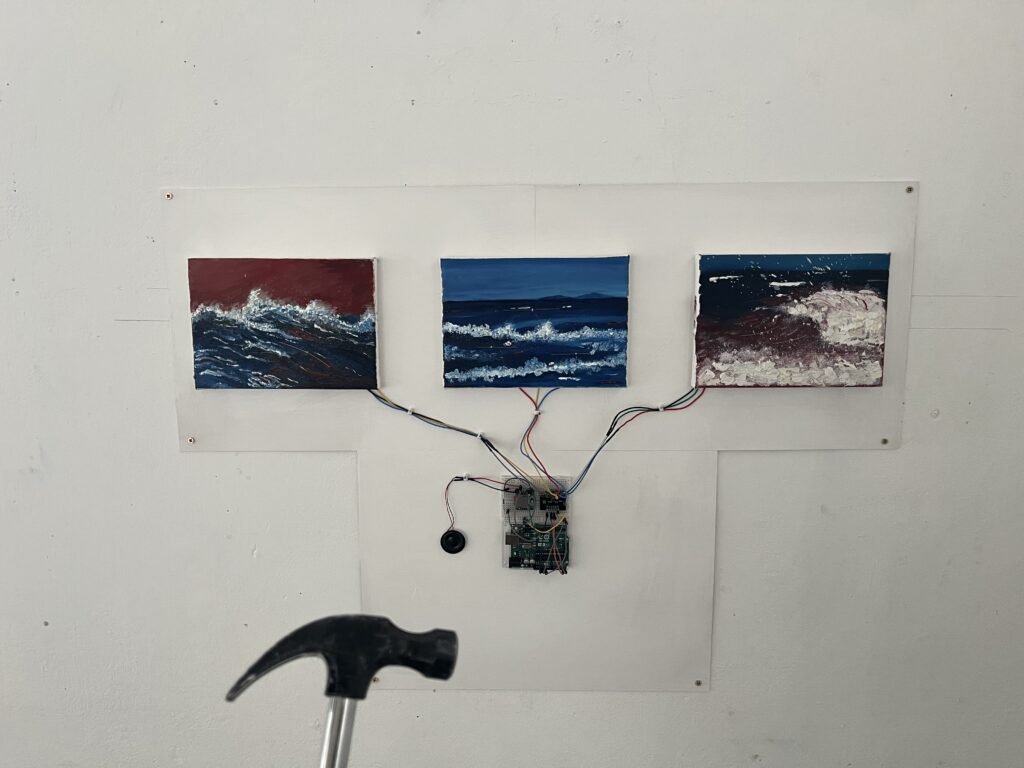
Time has flown by, and my project has reached its final stages. I didn’t want to simply hang them all directly on the wall; I felt I needed a platform to bring them all together neatly. However, I could make this platform less conspicuous. I found three very thin wooden boards, glued them together and painted them white so they would blend in well with the wall. The upper section is for hanging the three paintings, whilst the lower section is for housing the wiring and the Arduino board. As for the wiring, I don’t intend to conceal it all as I did before; on the contrary, I want to display it. I believe that having these colourful jumper wires emerge from the paintings and connect to the circuit board provides an excellent visual guide and prevents the overall project from looking too monotonous. I spent some time putting them together and secured them to the wall with nails and a hand drill.
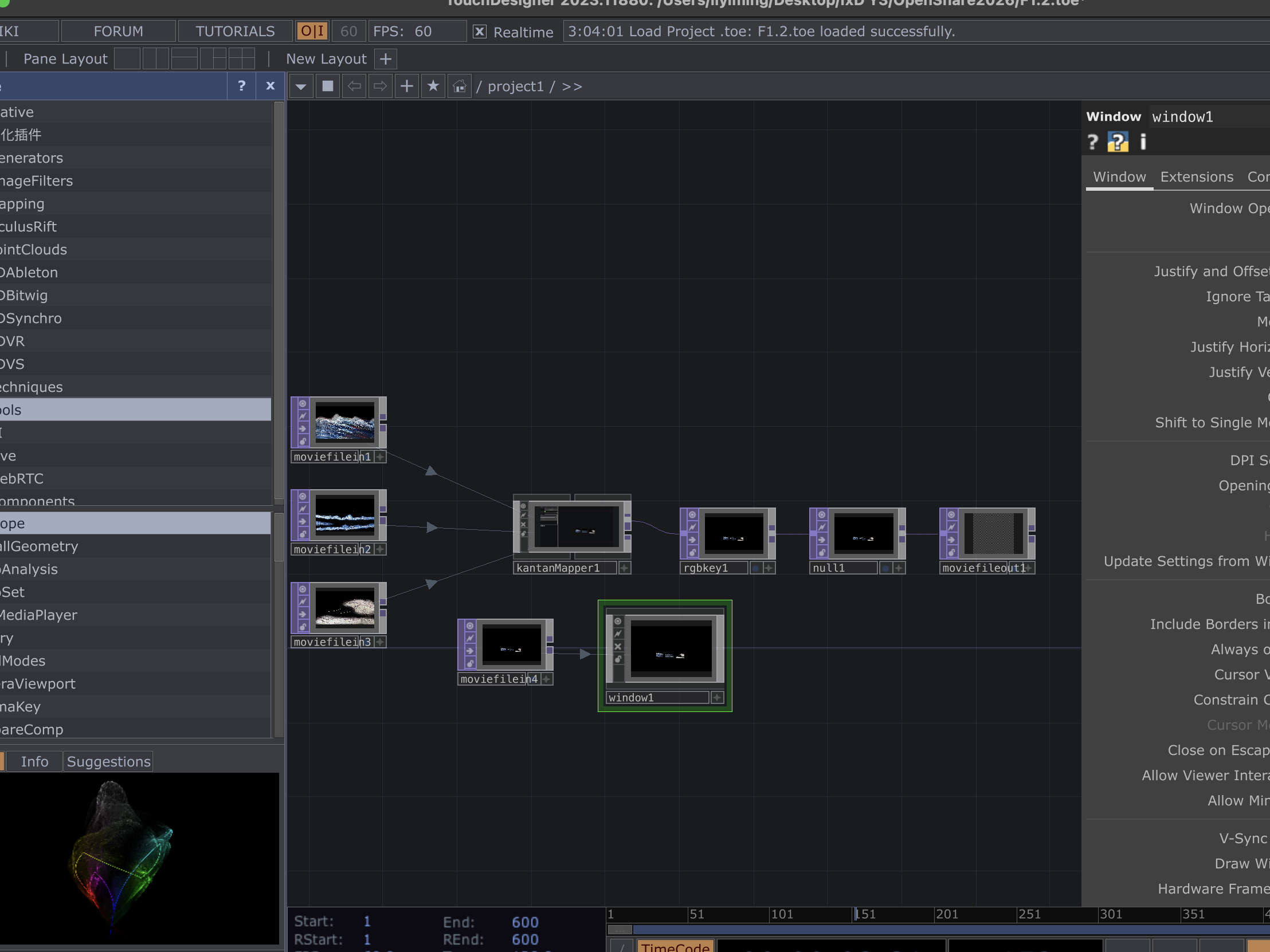
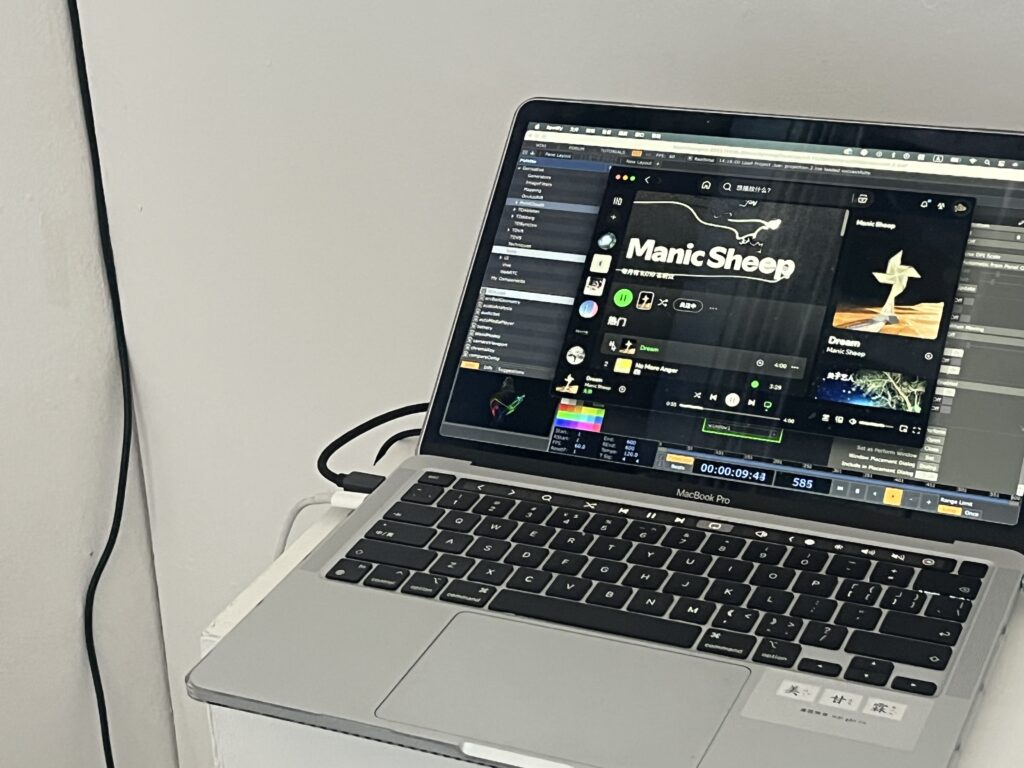
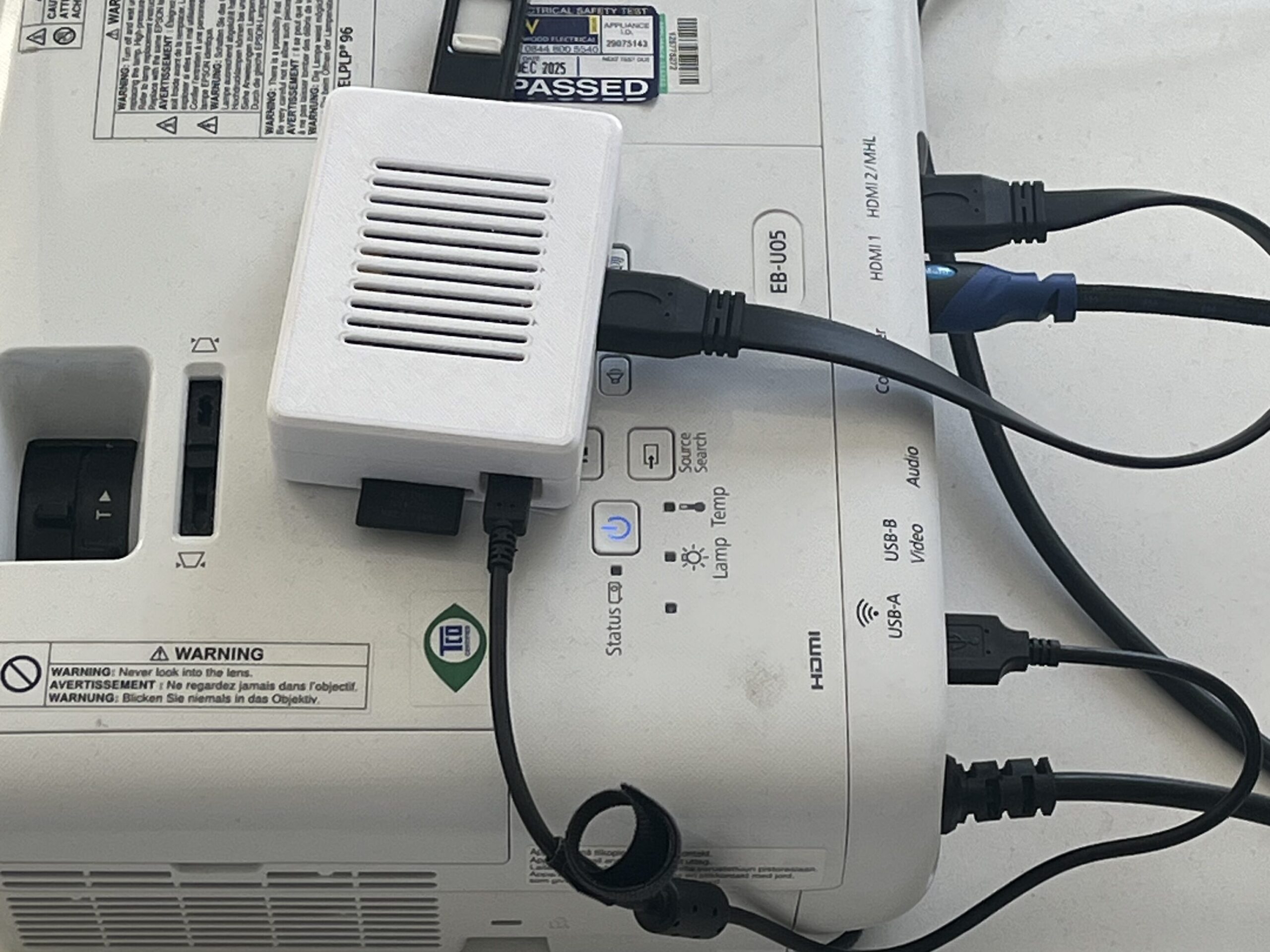
Next, I began testing the projection. To be honest, this was the part of the project that took up most of my time. As I couldn’t use a laptop, this meant I had to export the projection—with positions mapped in Kantanmapper—as a video file in advance, and play it back using the Raspberry Pi’s media player. Throughout this process, I had to ensure that the resolution of my computer, the working resolution in Touch Designer, the projector’s default resolution and the final video resolution were all exactly the same. At the same time, even the slightest movement of the projector caused by adjusting the cables could result in the projection being completely out of alignment, meaning I’d have to repeat the whole process. Fortunately, after putting in a fair bit of effort, I managed to get it done in the end, and the result turned out quite well.
I’ve really enjoyed the process—working alongside everyone and striving together to bring an exhibition to life. I’m also grateful for this opportunity to showcase some of my own ideas. My three years at GSA have flown by; I don’t feel I’ve made much progress in my artistic practice, but I think I’ve found some of what I was looking for here.