
by Yiming Li
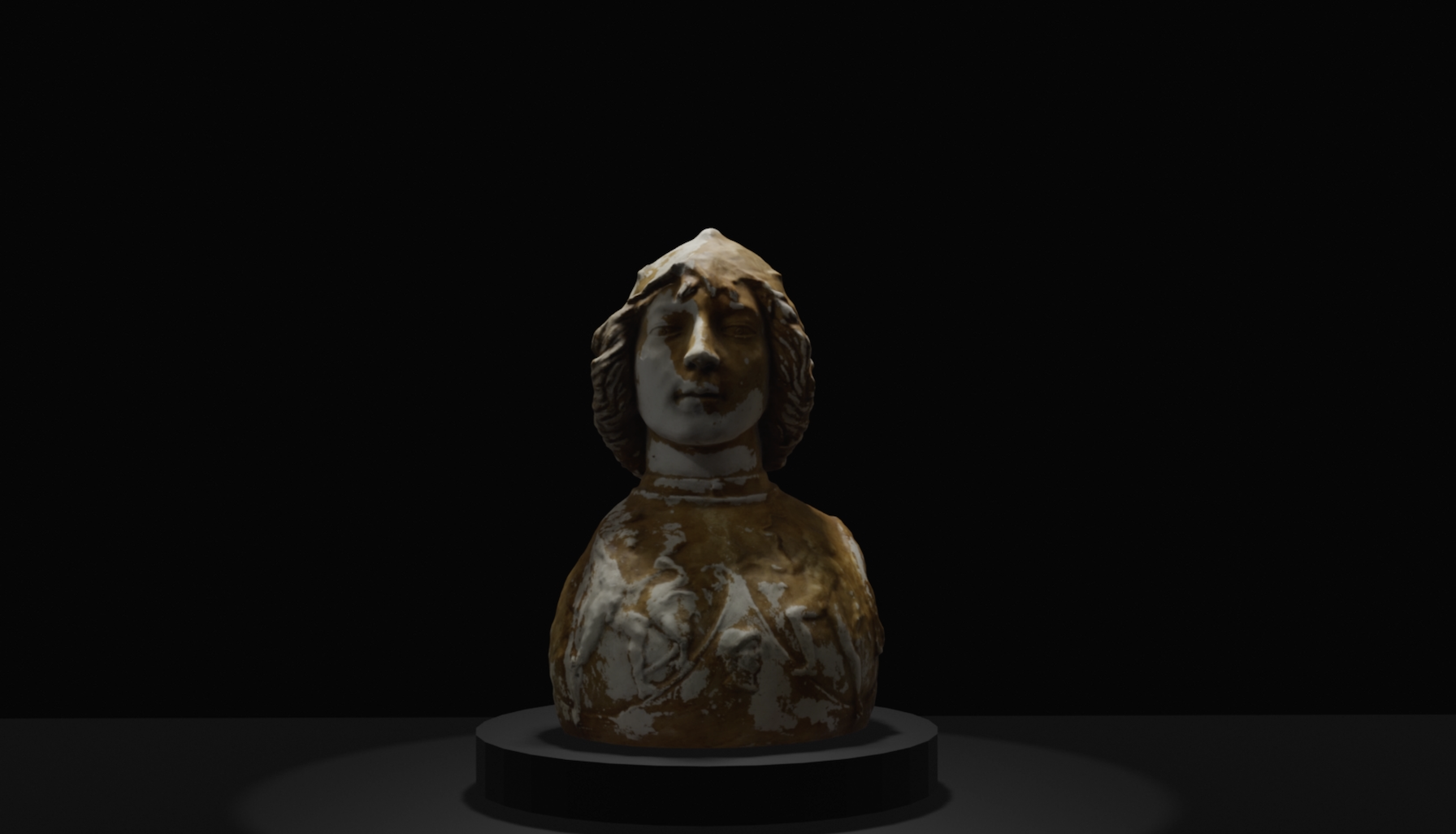
As a designer, I find learning to adopt different perspectives a fascinating process. This project is extensive, encompassing numerous aspects of our thinking and decision-making. Similarly, I consider team collaboration an excellent opportunity for me. I can focus on my own objectives, enhancing the project as a whole within my area of expertise.
Naturally, as a group assignment, this learning journal will primarily focus on my own contribution. I shall concentrate on explaining how these techniques were achieved, how they align with the project’s concept, and the future directions for consideration.
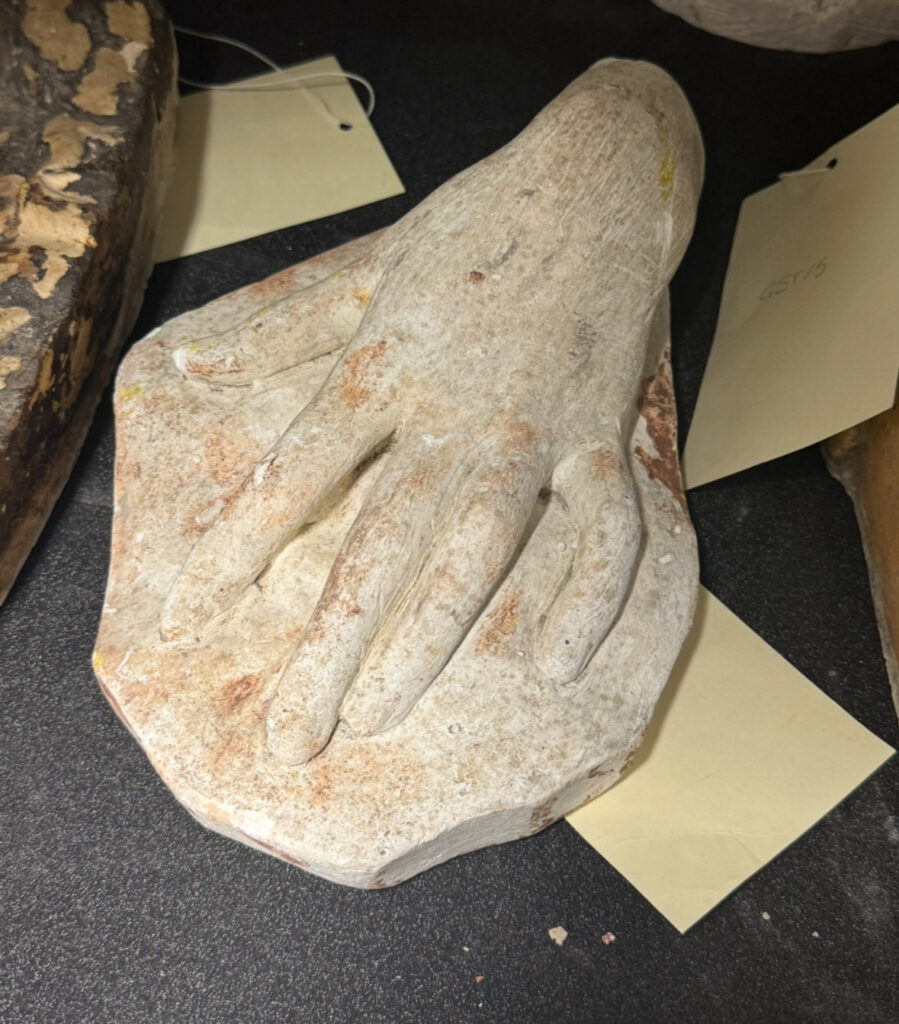
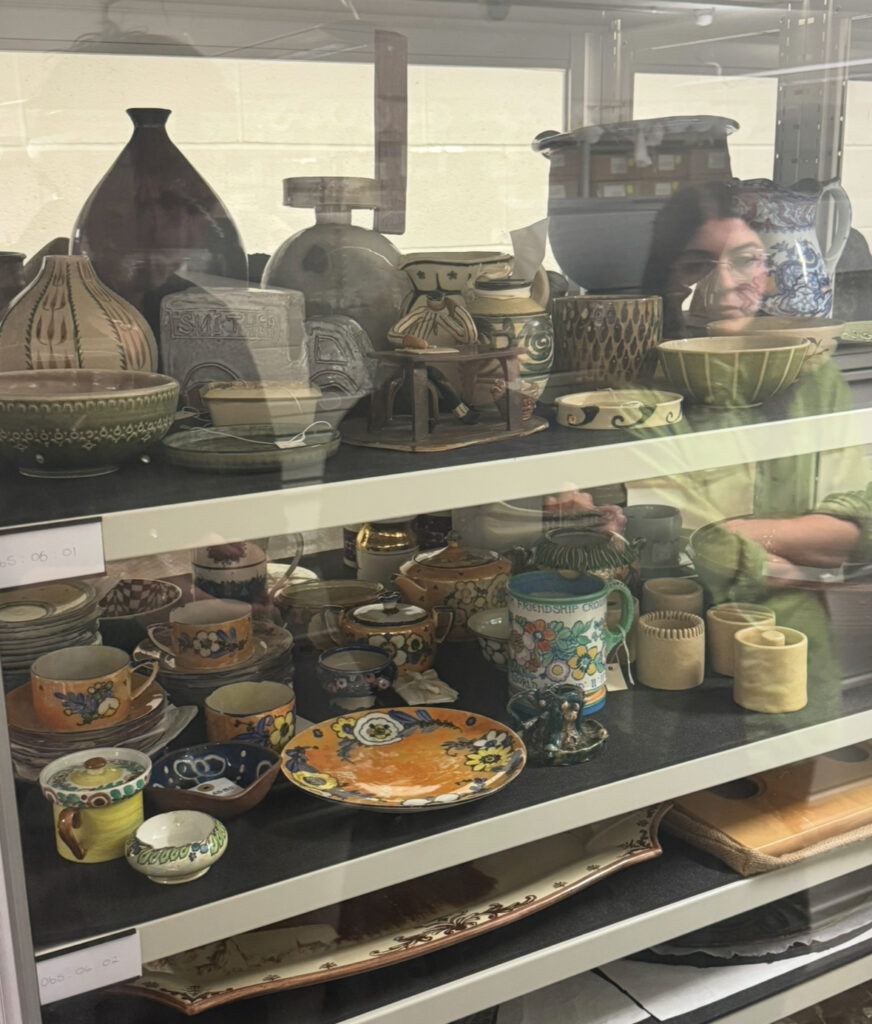
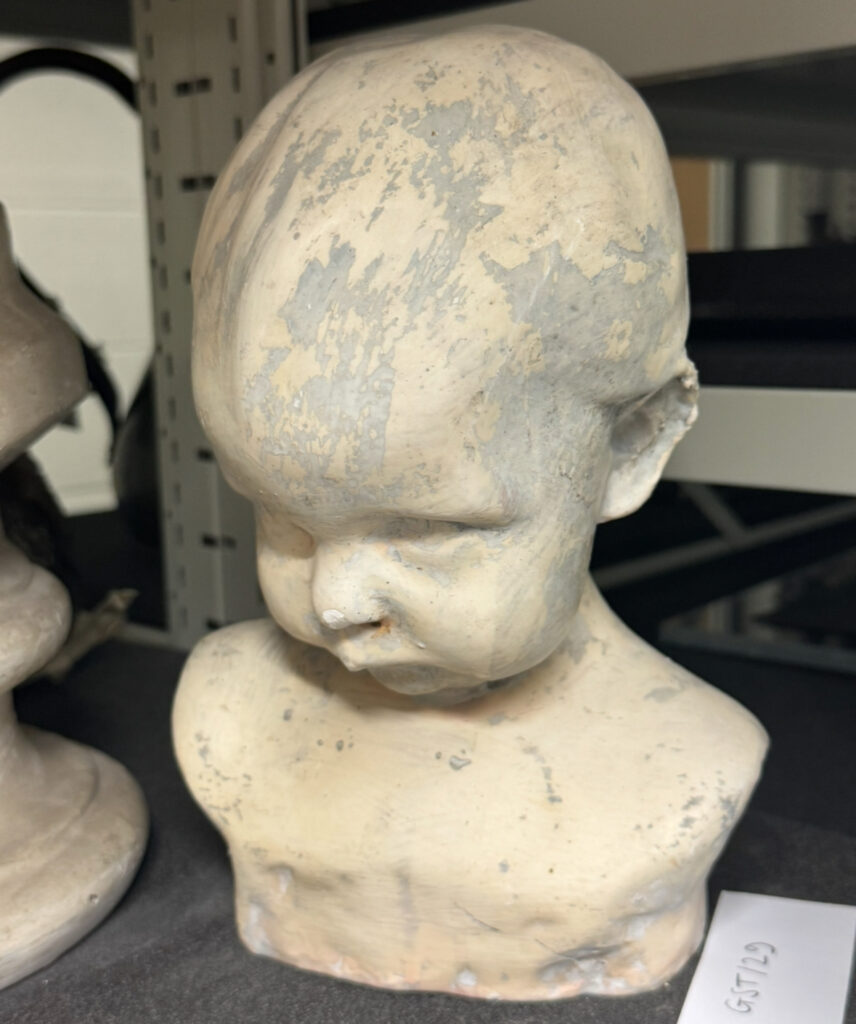
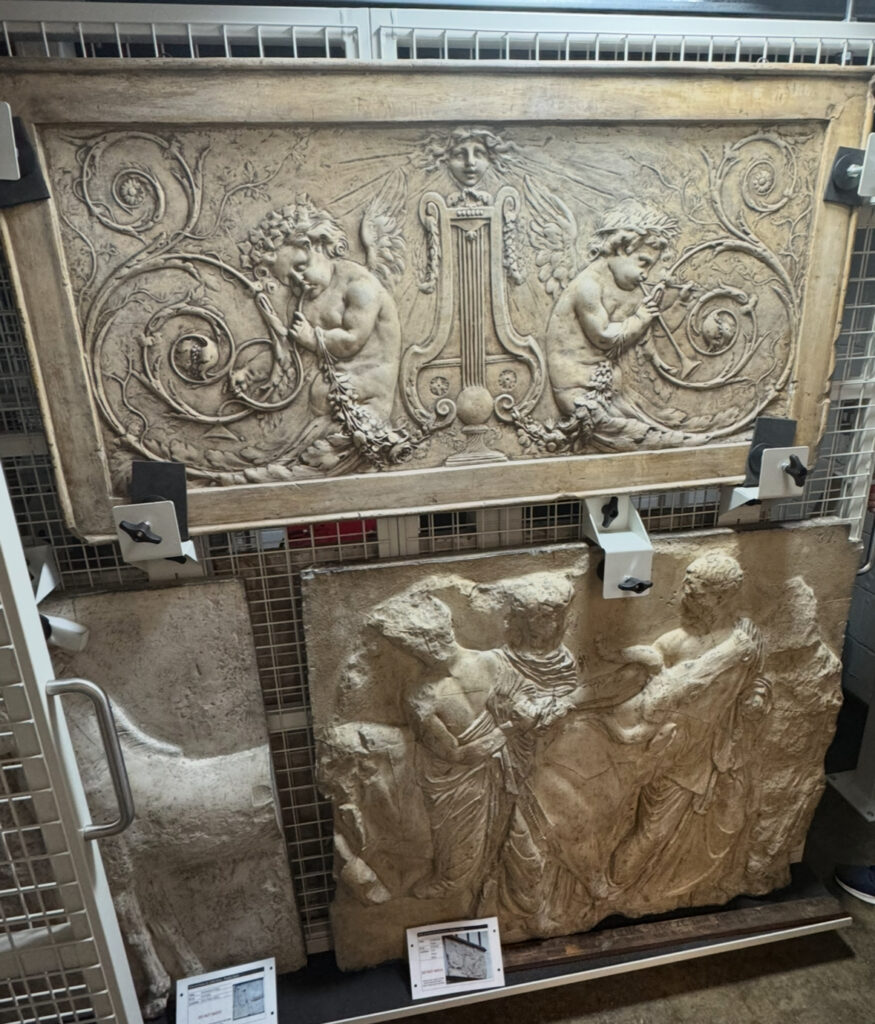
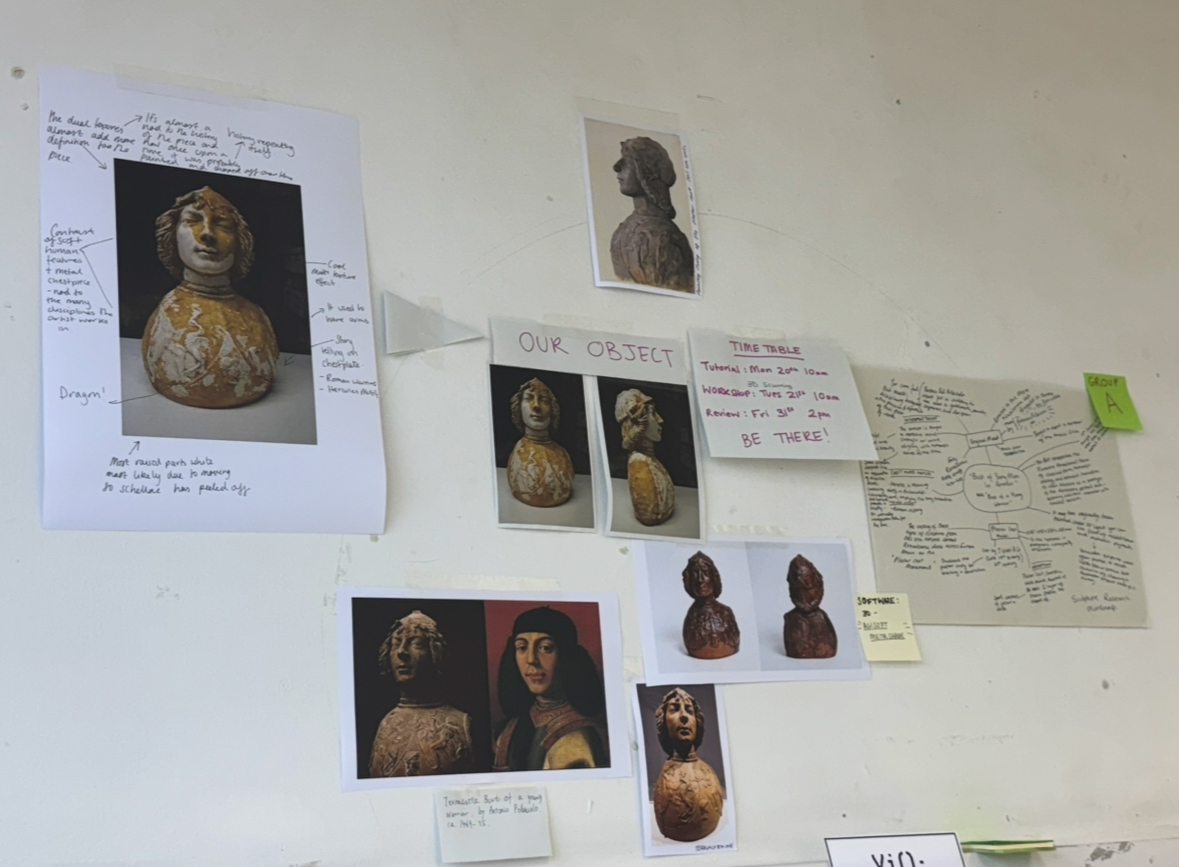
The GSA Archives is a most fascinating place. Personally, I should be quite happy to visit again in private. The item we selected is the “Bust of a Young Warrior”, a 19th-century replica used in art schools for students to copy and study. The original was created by Antonio Pollaiuolo sometime between the 15th and 16th centuries, but unfortunately the original has been lost.
We conducted a 3D scan of it. Two software programmes were employed during this process: Agisoft Metashape (requiring multiple photographs from three angles) and Scaniverse on a mobile device. We provisionally utilised the model generated by the latter, as it proved more convenient and delivered relatively precise results. Upon returning to the studio, I promptly optimised the acquired model to enhance the efficiency of subsequent editing.
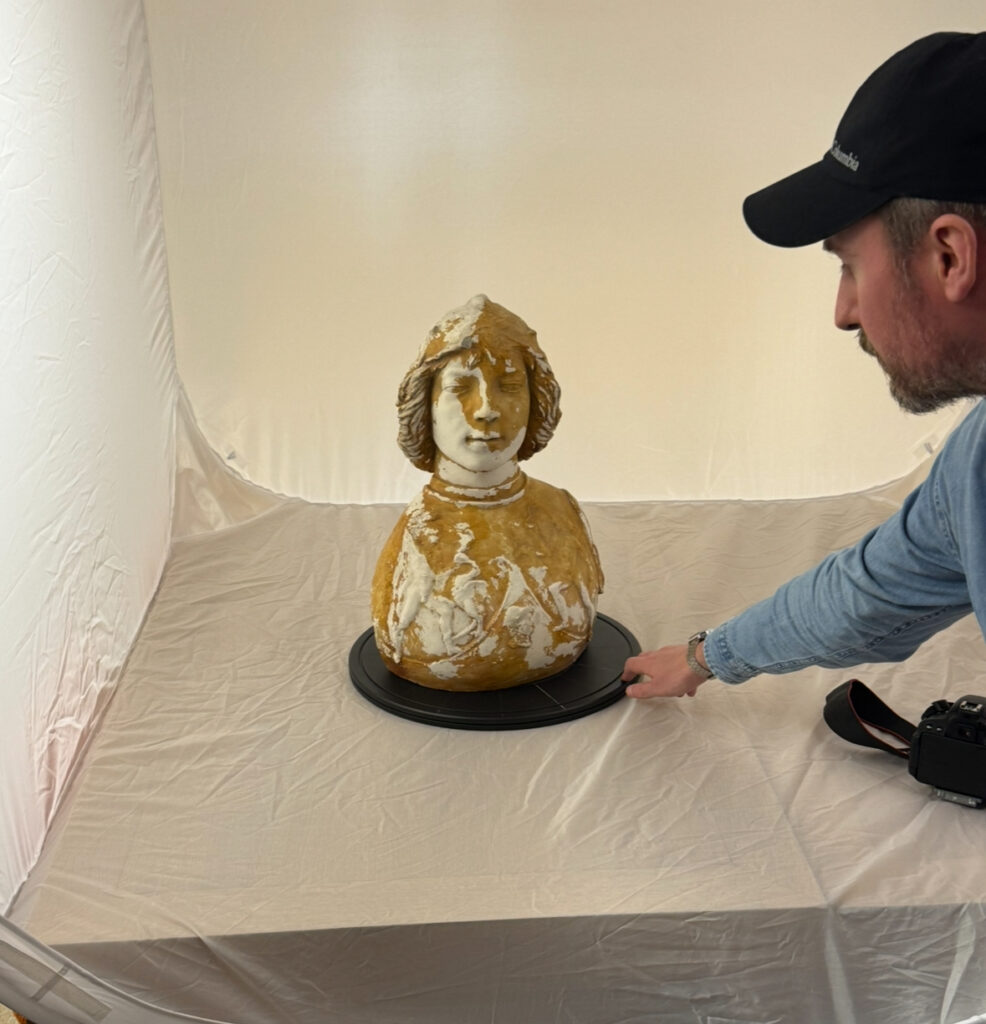
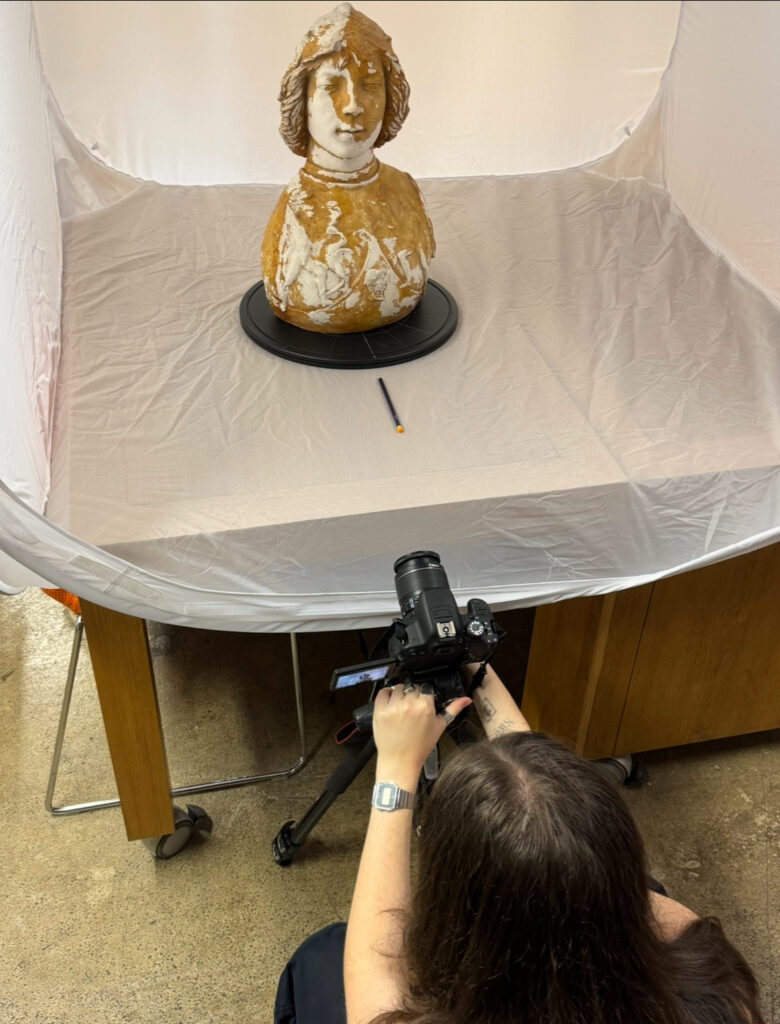
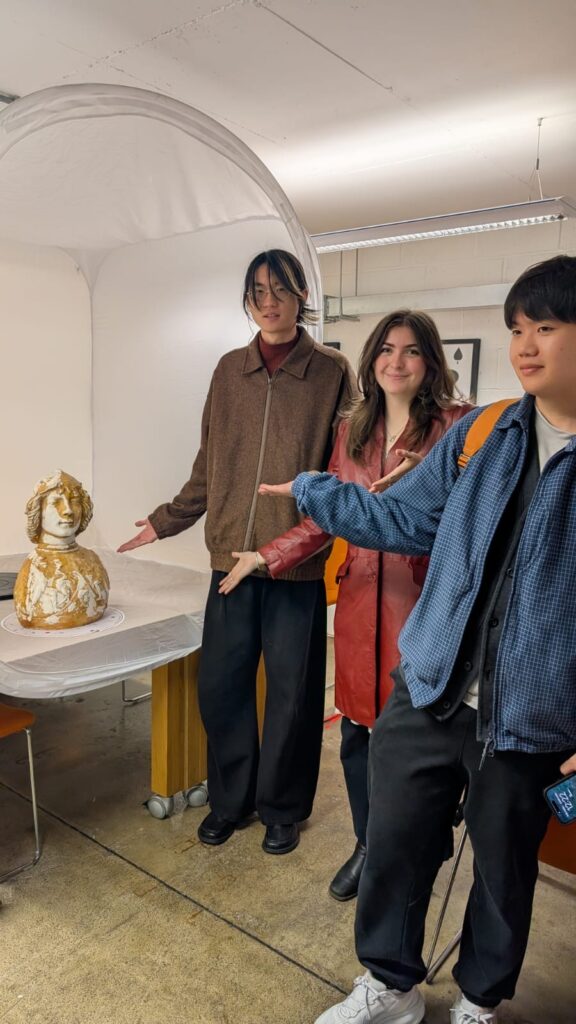
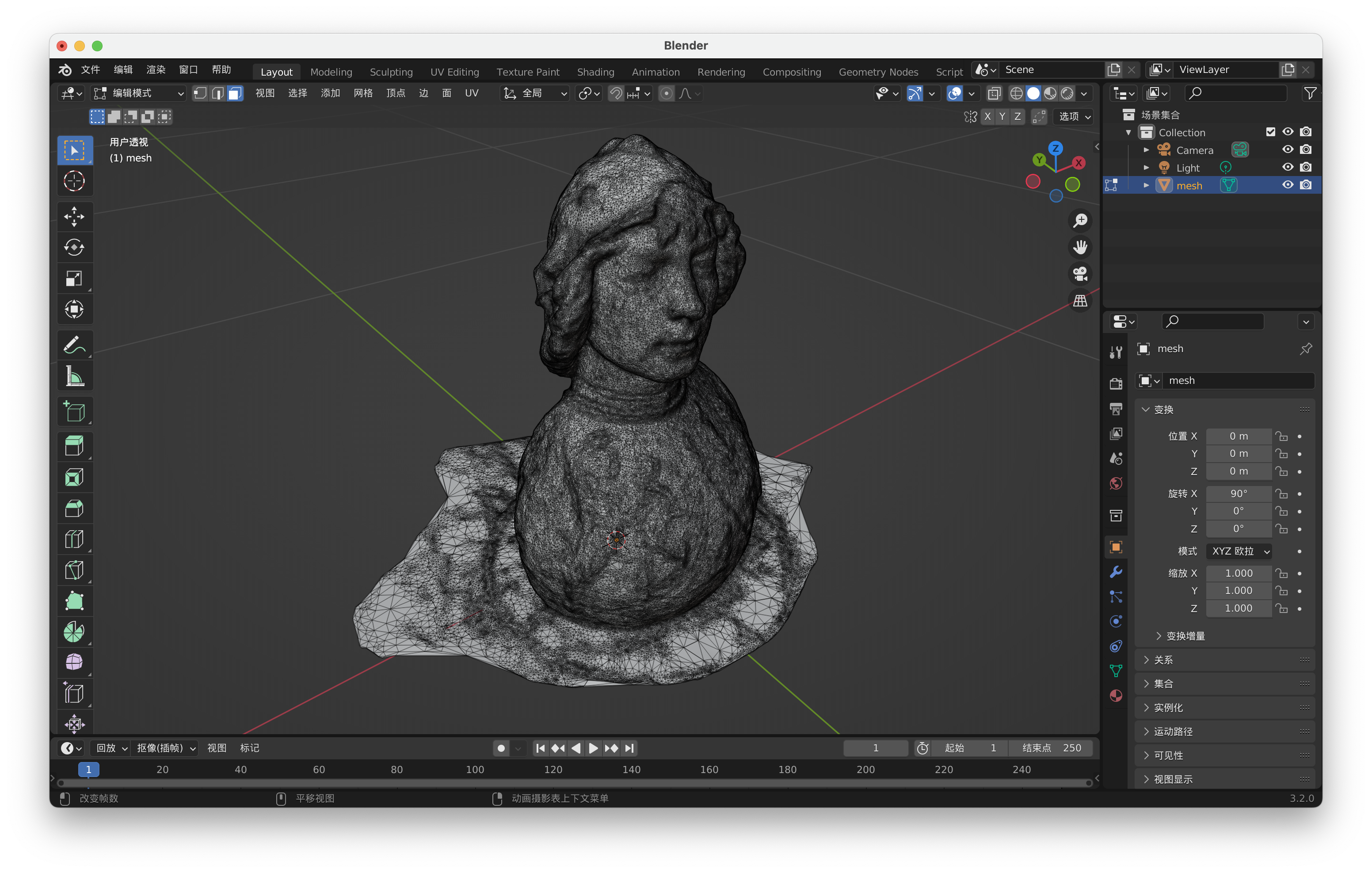
Models generated via 3D scanning invariably suffer from one common flaw: they possess an excessive number of polygons. Without optimisation, any subsequent direct manipulation will cause your computer to crash due to excessive computational load. Therefore, I imported it into Blender. First, I employed the Boolean tool to excise superfluous sections. Subsequently, I sealed cavities on the model’s surface and smoothed out irregularities. Finally, I utilised the Subdivision Surface tool to reduce the overall polygon count to 0.05 times its original value. This yielded a far more “editable” model. I have shared this model with the team members so that we may all utilise it for our next objectives.
After roughly a week of research and discussion, we unanimously decided to transform this project into a more entertaining art installation. The bust itself was ill-suited for exhibition in a gallery—a replica, with the original lost; no one knew who the sculpture had belonged to, let alone what figure it depicted. As a work of art, it appeared to have ‘nothing to say’. Yet it retains educational value—as an art object, it can cultivate children’s aesthetic appreciation and spark their interest in art—functioning as a learning tool. It was born for teaching, much like how a century ago, art academy students endlessly studied and sketched it.
Entertaining projects require us to genuinely consider our audience—namely, children. We ensure all design elements and concepts enhance the project’s appeal and ensure it remains sufficiently engaging. Children typically have little desire to be taught anything outside school hours, making the principle of “learning through play” all the more crucial for the entire initiative.
This will be an interactive VR game inspired by certain theories—namely, that this bust once possessed arms. We’ve incorporated this theory into the game, allowing players to freely reshape the bust within virtual reality. They can fashion new arms for it using clay, or even an entire body, much like sculpting a statue. For children, it feels rather like building sandcastles on the beach—utterly delightful and highly interactive.
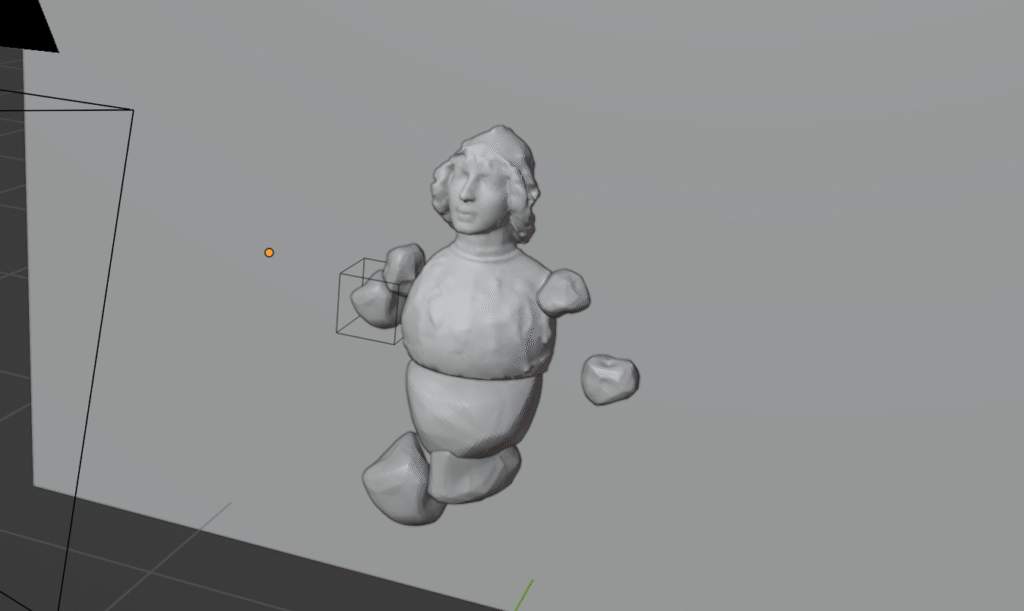
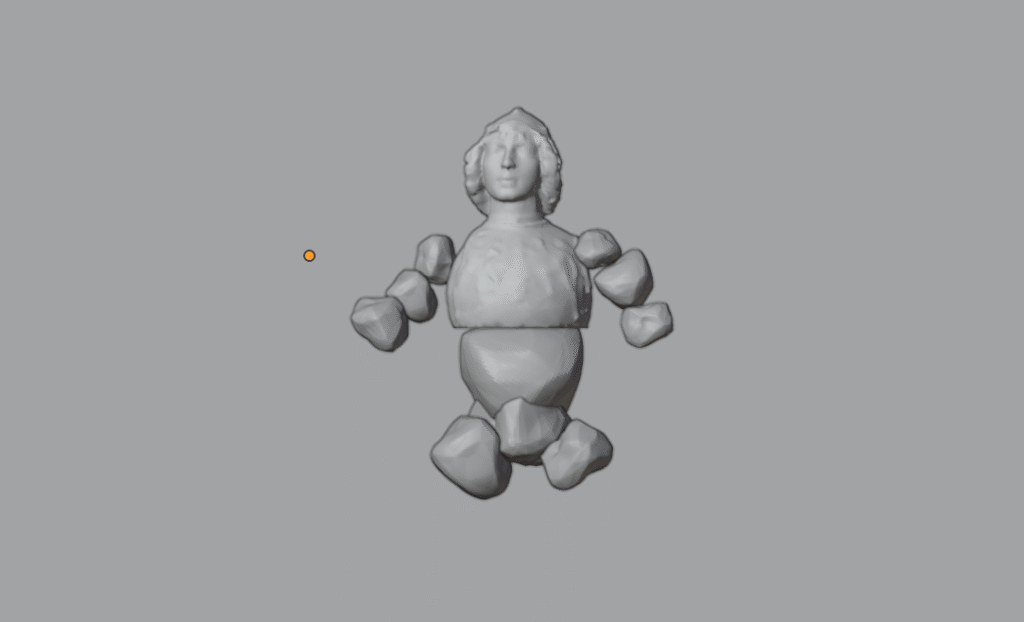
Throughout the final week, I have been endeavouring to develop some visual effects for the entire project, with the aim of providing material for the final presentation.
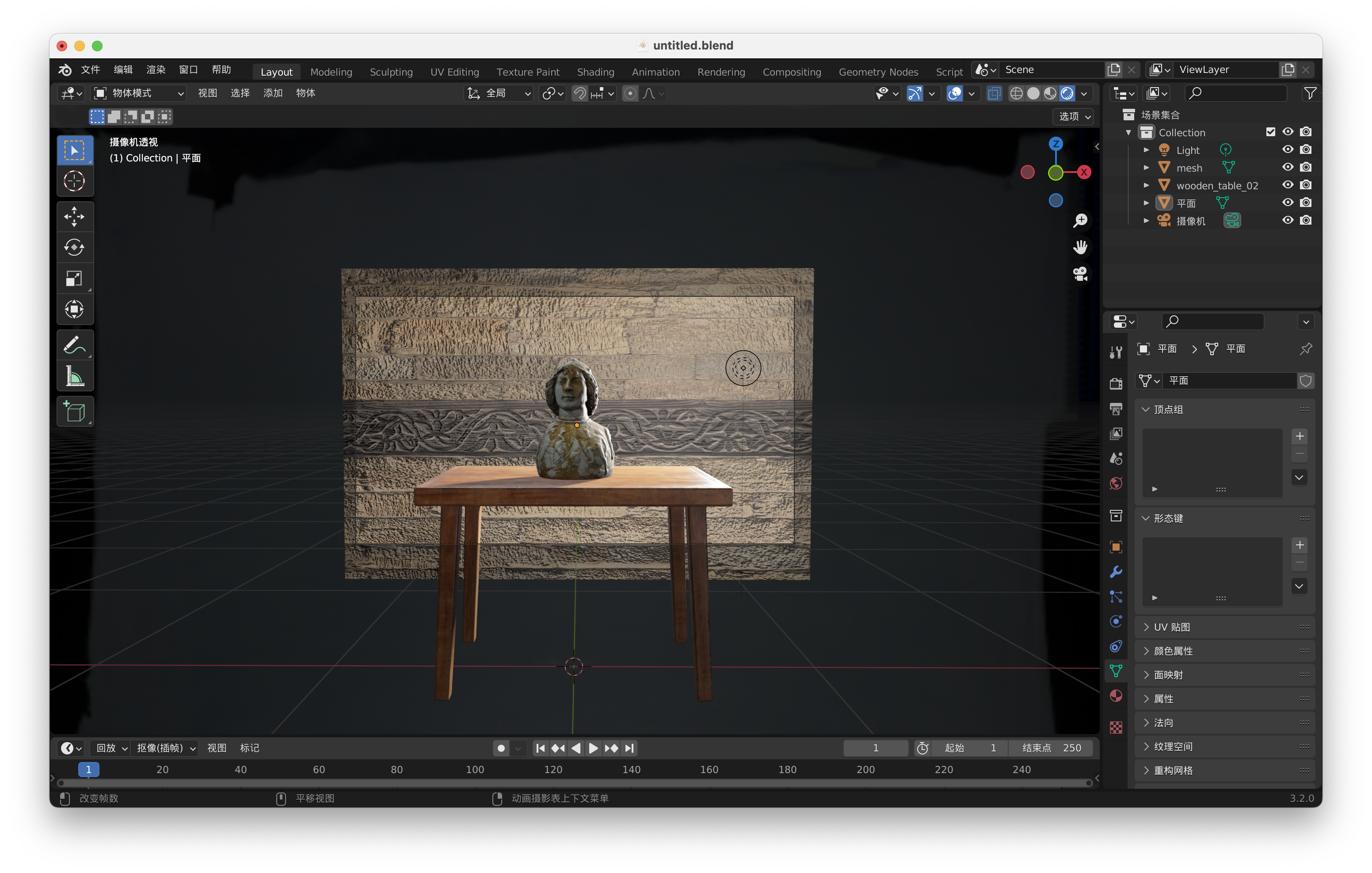
First, I constructed the entire project setting within the 3D scene. It essentially comprises a banner, an introductory panel, a set of VR equipment, and a display unit embedded within the wall. For the entire backdrop wall, we selected the same material as the bust—a pattern composed of yellow and white. We believe this approach offers two advantages: firstly, the material itself possesses a rich texture, enhancing the connection between the project and the bust; secondly, this colour scheme creates a calmer, more welcoming appearance, thereby increasing its appeal to visitors.
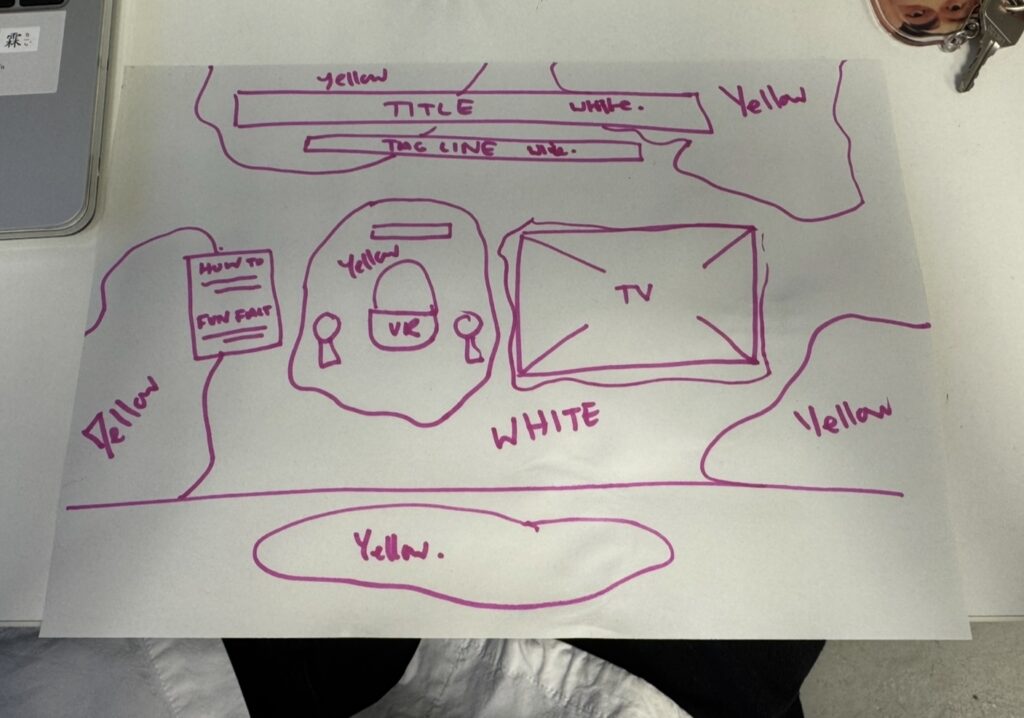
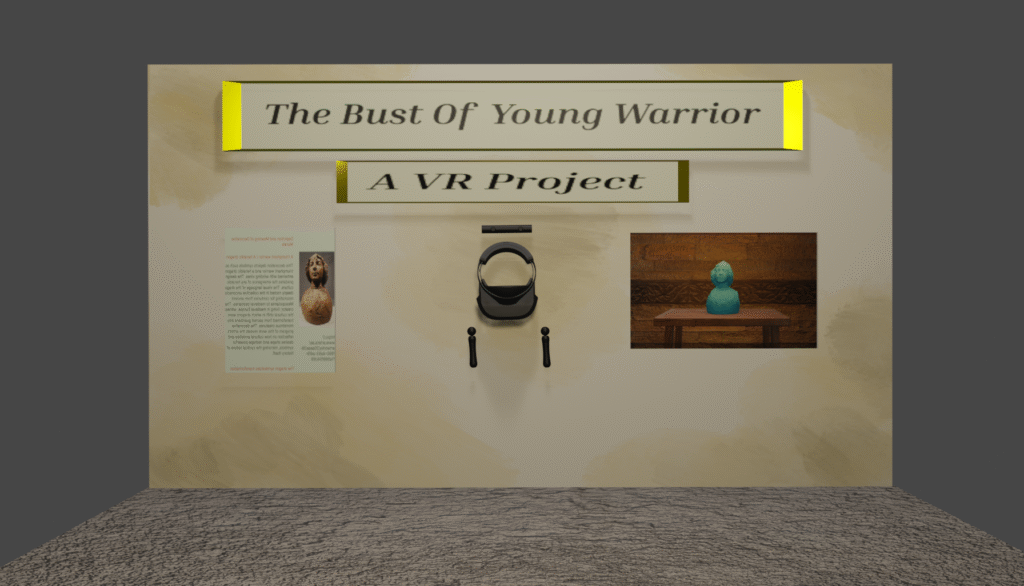
Of course, this setting is not the final version. We hope to make different adjustments based on the specific exhibition context, such as whether it is displayed in an exhibition or a museum.
Another task I’ve been occupied with is creating a “standby animation” for the entire project. Much like any project featuring live-action segments, these possess a “standby animation” when no interaction is occurring. It functions rather like a billboard, designed to attract customers—in this case, my audience. Also, this standby animation will also be utilised in the final VR game as the background image displayed when the player presses “start”.
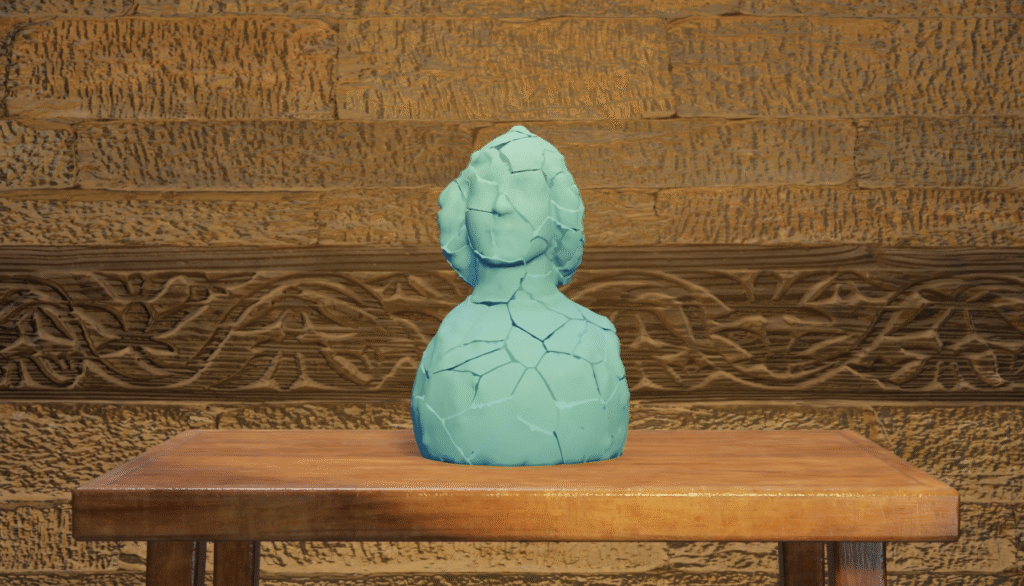
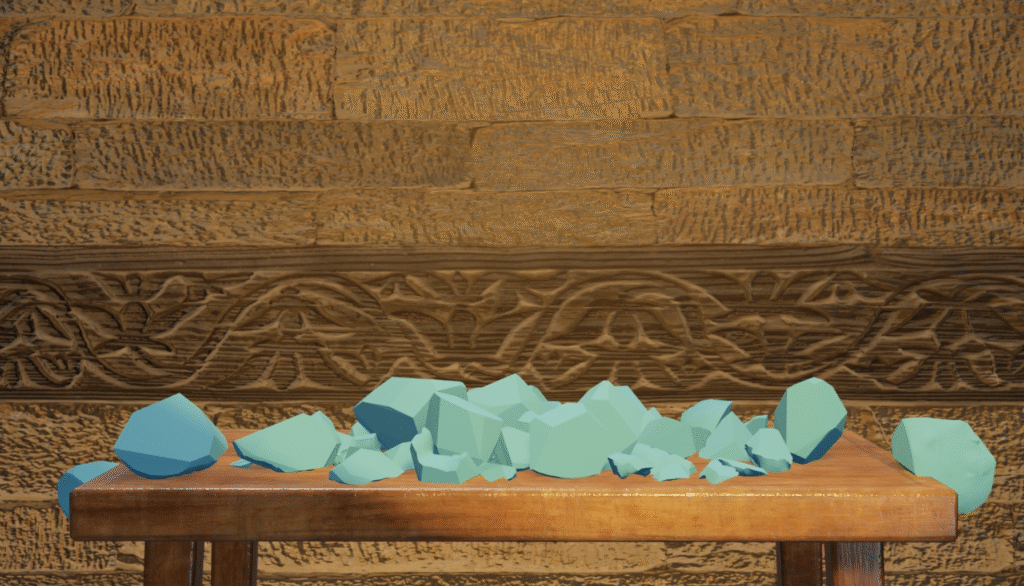
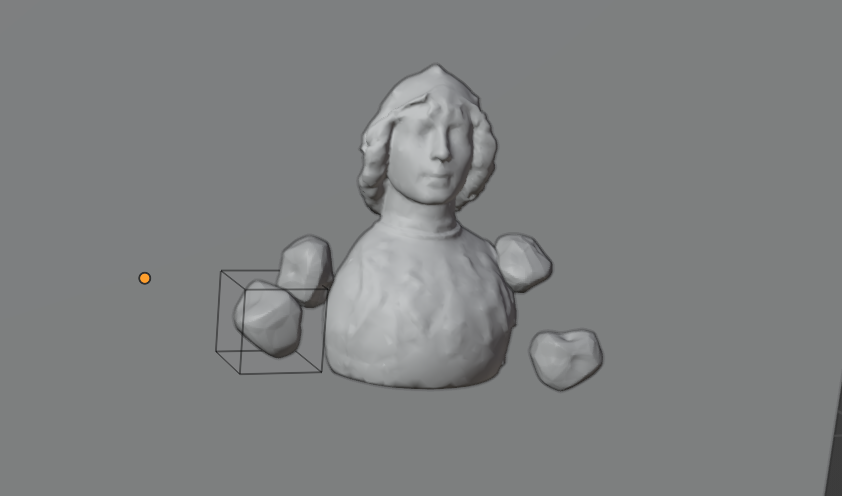
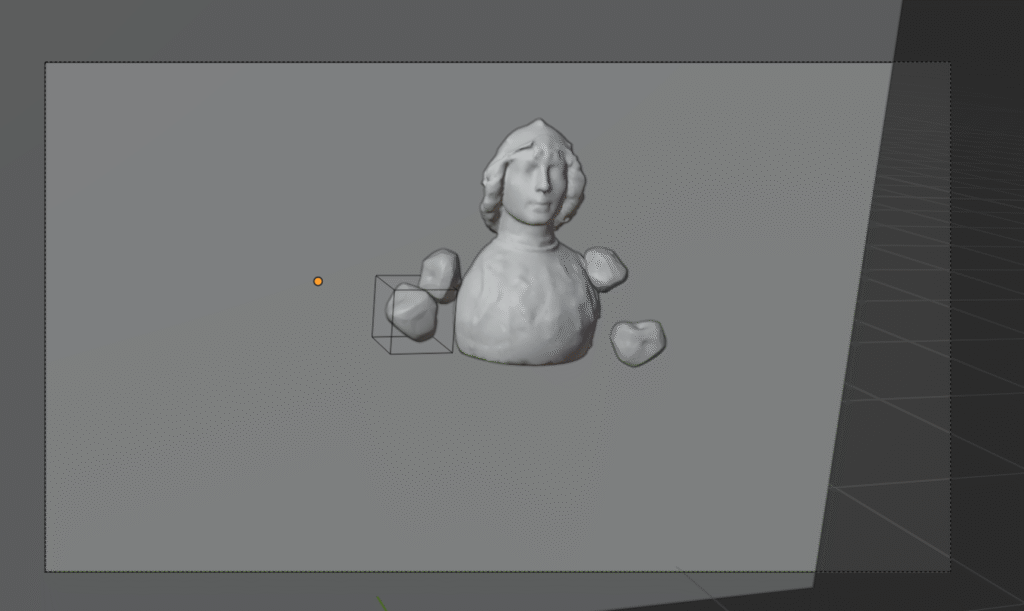
Creating this section inevitably brings us back to the topic of “entertainment value”. Over the past few days, I’ve been experimenting in Blender, trying to discover the most engaging presentation methods. I altered the entire model’s materials, experimenting with different physical effects: I made them jelly-like, soft enough for players to freely squeeze and squish them; I made them balloon-like, so they could collide and burst; Ultimately, I settled on the latter approach. This utilises a built-in Blender plugin that simulates a “cell division” effect. When applied to a rigid body model, it randomly generates fragments that can be manipulated individually. This effect aligns more closely with Bust’s inherent material properties, and the shattering appears sufficiently realistic.
Over these past three weeks, everyone has worked exceptionally hard. I’ve grown to appreciate teamwork; I relish the sense of collective effort towards a shared goal. Each day we meet, plan, allocate tasks, and conclude by presenting our progress and consolidating our work. Though the project lacked a clear brief, we’ve persistently explored and experimented. Thanks to my colleagues, I’m utterly confident we can deliver something truly remarkable in the latter half.
Pingback: Experience Design Part II – Learning Journals by Yiming Li